
The Office & Judaica Shop are CLOSED Monday, September 21.
The Office will open at 11am Tuesday, September 22.
There are NO Wednesday night activities September 23.
Message
Rabbis Ari & Marty Waldman•Acts 15•March 15, 2025
Timestamps seek whichever format is playing — video or audio.
0:00 Of things to share as I, as I have for the last, I think it's been 16 months now, there remain 59 hostages still being held. I hadn't realized it, but actually 58 of those were abducted on October 7th. The other has been a hostage. Longer. 24 of those are believed to still be alive reportedly. And, uh, I I, I read an article, I thought it was worth noting, but I think it's a, I think it's a tactic.
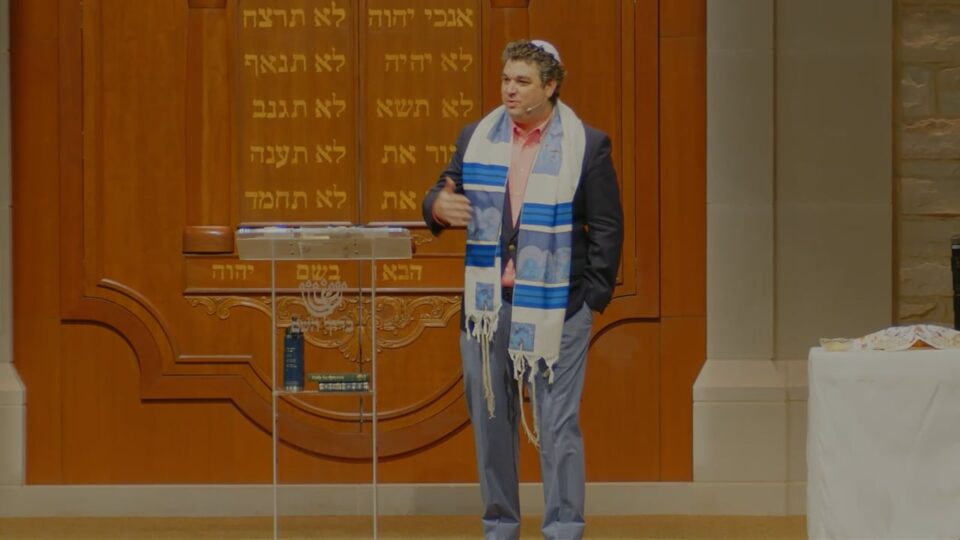
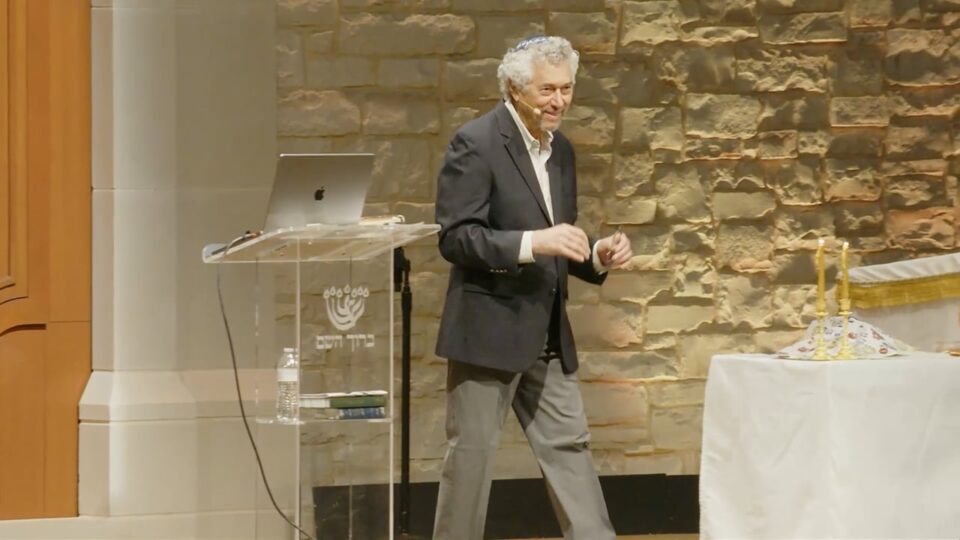
0:46 But Hamas has reportedly agreed to release, uh, one living us Israeli hostage, and the bodies of the remaining, uh, the four remaining bodies of US Israeli citizens, uh, they're dual citizens. And if I remember right, I think that's all five that remain. Who are Americans? Um, I don't want to, I don't wanna share too much because we have a little bit of a special day today, uh, which, which we haven't done this when, I think it's been six years or so, but we are starting in on Acts 15. And as such, I actually have invited my father, rabbi Marty Waldman, to come and join me on the stage.
1:40 And what we're going to do is we're going to have a conversation. The two of us, actually, it's a little bit, kind of like Acts 15. We're gonna have a conversation and, and y'all can listen in. Uh, and, and we're gonna start on Acts 15, and we're gonna be doing this for the next, uh, few weeks. And there may be an opportunity for some further interaction along the way. But we, uh, acts 15. Let me give you some history here as to, I don't, I don't just invite my father because he's my father. Um, he's also the founding rabbi of em,
2:30 but also he is, what's your title, dad? Executive Director. Executive General. Executive General Secretary. That's a mouthful of, uh, of TJC two toward Jerusalem Council two, which if you hadn't caught by the name, has to do with the Jerusalem Council. Uh, and, and you okay, if I summarize in like two sentences, TJC two. TJC two is a, um, is an initiative toward a, a, a second council or something in that form. And, uh, for the purpose of Opening Up,
3:17 Um, The, the idea of Jews being able to remain Jewish and believe in the Messiah, I, there's a whole lot more to TJC two, but, but if I, is that a, is that a fair summary? So we are going to continue, excuse me, as I get my notes, you guys see, every week I get more technologically, uh, with it. At least that's what I tell myself. Standby. As I attempt
4:02 a few things, as we are here in Acts 15, I want to remind us kind of actually how we got here. So before we get into Acts 15, by the way, we're gonna spend a lot today of the, before we get into Acts 15, you'll, you'll see, uh, but before we get into Acts 15, I think it's important for us to remember, or to recall the beginning of Acts. And all of a sudden, you're going uhoh, he's going back to the beginning, back to the beginning of Acts.
4:48 In Acts chapter one, verse eight. In fact, I wanna read to you verses six through eight, because it kind of sets the trajectory for the book. In chapter one, verses six through eight. It says, they've gathered together as the disciples, they've gathered together around Yeshua. And they said, Lord, are you restoring the kingdom to Israel at this time? And he said to them, it is not your place to know the times of the seasons, which the Father has placed under his own control, But you will receive power when the akko has come upon you, and you'll be my witnesses in Jerusalem through all Judah and Samaria, and to the end of the earth.
5:34 So here we have The reason why the AK is going to be poured out, which we see in, in Acts two. But the reason why is to empower them to go to the four corners of the earth, to go to all of the, to all of the distant places in the earth, making disciples in Jerusalem, Judea, or your text may say, Judah, Samaria, and to the end of the earth. Now, if you've come on Wednesday night, you've heard me say this disclaimer, it was primarily understood at this moment. And we cannot render a negative judgment because of it. But it was primarily understood or viewed through a Jewish lens. It's restoring the kingdom to Israel.
6:21 That's the, the primary question. When are you going to restore the kingdom to Israel? And Yeshua says, it's not for you to know when, but the Ruach will be poured out, and you're going to go to Judah, to Jerusalem, Judea, Samaria, to the end of the earth, making disciples. So I want you to understand in the context of the question, it's when is the kingdom going to be restored to Israel? They're thinking about Israel only. You can't render a negative judgment on them, because that's the, this is the context of the question. But what we've unpacked over the last, has it been year and a half, I think, unpacked through the first 14 chapters, and we really started unpacking in the last,
7:07 in the last couple months, is that there's more than just Jewish disciple. The, the idea that Jewish disciples are to be made. There's, there's a mystery that's beginning to unfold. And now we come to Acts 15 and Acts 15, we've, we've entitled this the paradigm shift because it, it really is a paradigm shift, i i, in, in a mental, in a mentality or an understanding. So the idea here is we're pivoting or we're shifting to understanding that in God's plan, it's not just Israel or the Jewish people, it's actually includes the nations, or, or at least at this point, individuals from the nations.
7:54 And the primary question here in Acts 15 is, how do we include these people that are coming from the nations into the kingdom? And, and so now what I want to do is read Acts 15 so that you can have it all in one hearing, and we'll do this more than once. And then we will, we will start our discussion. Acts 15. Now, some men coming down from Judea, were teaching the brothers, okay, I'm sorry, lemme pause for a second. Just as a reminder, were in Antioch. Paul and Barnabas have come back from their trip and, and they're in Antioch. And this is what's going on. And now here, acts 15 opens up.
8:42 Now, some men coming down from Judea, were teaching the brothers. Unless you are circumcised, according to the custom of Moses, you cannot be saved. When Paul and Barnabas had a big argument and debate with them, the brothers appointed Paul and Barnabas with some others from among them to go up to Jerusalem, to the emissaries and the elders about this issue. So they were sent on their way by the Antioch community. They were passing through Fania Samaria, describing in detail the conversion of the Gentiles. And they were bringing great joy to all the brothers and sisters. When they arrived in Jerusalem. They were welcomed by the community and the emissaries and the elders.
9:27 They reported all that God had done in helping them. But some belonging to the party of the Pharisees who had believed, stood up saying it is necessary to circumcise them and to command them, to keep the Torah of Moses. The emissaries and elders were gathered together to examine this issue. After much debate, Peter stood up and said to them, brothers, you know that in the early days, God chose from among you that by my mouth, the Gentiles should hear the message of the good news and believe. Recall a, uh, acts chapter 10, with Cornelius, and God who knows the heart, tested them, uh, testified to them by giving them the ruakaka Kodesh, just
10:14 as he also did for us. He made no distinction between us and them purifying their hearts through faith. Why then do you put God to the test by putting a yoke on the neck of the disciples, which neither our fathers nor we have been able to bear. But instead, we believe that we are saved through the grace of the Lord Yeshua, in the same way as they are. Then the whole group became silent, and they were listening to Barnabas and Paul as they were describing in detail, all the signs and wonders God had done through them among the Gentiles, after they finished speaking Jacob, in, in some of your translations, this is, is James, you'll, he has a book by his name also, Jacob answered.
11:02 Brothers, listen to me. Simon or Peter, uh, has described how God first showed his concern by taking from the gentiles of people for his name, the words of the prophets agree as it is written. After this, I will return and rebuild the fallen tabernacle of David, and we'll rebuild, I will rebuild its ruins, and I will restore it so that the rest of humanity may seek the Lord. Namely, all the gentiles who are called by my name says Otai, who makes these things known from of old. Therefore, I judge not to trouble those from among the Gentiles who were turning to God, but to write to them, to abstain from the con, uh,
11:48 contamination of idols and from sexual immorality, and from what is strangled and from blood for Moses, from ancient generations has had in every city, those who proclaim him since he is read in all the synagogues, every Shabbat, then it seemed good to the emissaries and the elders with the whole community to choose men from among themselves to send to Antioch with Paul and Barnabas. They sent Judah also called Sir Barsabas and Silas leading men among the brethren and this letter along with them. So now here's the letter, the emissaries and the elders, your brothers, to the Gentile Brothers of Antioch, Syria, and Ccia.
12:34 Greetings. Since we have heard that some from among us have troubled you with words disturbing to your souls, although we gave them no such authorization, it seemed good to us having come to one accord, to select men to send to you with our beloved Barnabas and Paul, men who have risked their lives for the name of our Lord, Yeshua, the Messiah. We therefore have sent to you, Judah and Silas, who themselves will report to you the same things by word of mouth. It seemed good to the kodesh, to us, not to place on you any greater burden than these essentials that you abstain from things offered to idols from blood,
13:20 from things strangled and from sexual immorality by keeping away from these things you will do. Well, Shalom, we're gonna, we're gonna stop there. The, that's, that's the rendering of, of the Jerusalem Council in Acts 15. The rest is, is sending them off. And we'll get to that after we discuss for multiple weeks the, the, uh, the, the rendering judgment. Okay, wonderful recap, rabbi Ari. Now I want to give not a recap, but an introduction. You thought we were just going straight into the text, but you were wrong.
14:08 We are gonna get into the text today, but I, I, I, you know, Ari and I have, have sat down together now for hours, just discussing Acts 15. And it's both enlightening in the exchange of understanding and maybe increase of a measure of wisdom that we gain from one another. But it's also fun. It's also, if you've never been in a, just a biblical discussion with a, with two or more people, a small group, um, you're missing out because it's actually fun. It's a fun thing to do. So we want
14:56 to share some of that fun with you. And, uh, it'll be fun for the next few weeks, I hope, uh, as we discuss Acts 15, and ultimately the rendering of Acts 15, the judgment that, uh, the leaders of the, what we call most of your translations, call it the church, but it's, it's really not called the church. It's, it can be refer, can be referred to as the Messianic community, also can refer to as the way or the K law, the congregation, the assembly. Uh, but keep in mind that the early K law, the early congregation, the early group, large group,
15:45 in fact, up to 10,000 or more, tens of thousands, the early congregation was made up of Jewish people. All Jewish people, except, you know, I don't even, I don't even know if we could say Cornelius was an exception in Acts chapter 10, because he wasn't really part of the early, early body of the Messiah that was birthed in Acts chapter two. Uh, so I would like to break this introduction down into three parts. Maybe it'll help you understand where we're coming from. So you can interpret Acts 15, you can approach Acts 15
16:31 as you can, the entire book of acts from different perspectives. Uh, for one, I, I approach the Book of Acts in a, in one part as a book of Halakha. It's a halachic rendering of how do we live out this faith and walk with Yeshua? How do we live it out? What does it look like? It doesn't look like you, you know, the rendering or the Hal Halal decisions that were made by the greater Jewish community at the time. It maybe looked something like that. But for the most part, this is new. So how do we Jews live this out, this, this walk
17:19 with the Messiah, this walk with Yeshua? So I wanted to break it down in three parts, past, present, and future. Make it easy. So in the past, the focus was on the Torah. So I want to, I want to highlight the Torah. The, in the past God's heart and God's love was fixed or focused on the people of Israel, the descendants of Abraham, Isaac, and Jacob. Keep that in mind because of what Ari, uh, rabbi Ari just said. You, you have to understand that at the beginning,
18:06 this was all still in a Jewish mindset. The focus was on Torah, the focus was on the Jewish Messiah, have having come to Israel, the Jewish people, and what are we supposed to do? And so I wanna start with the past. So it'll help give a little bit of understanding of how the, how the, the Council Of Acts 15 rendered their decision. Yes, acts 15 says, it was good to us and to the Holy Spirit, keep that in mind. Good to us and to the Holy Spirit. So we can understand that there was a, a leading
18:52 of the Holy Spirit as the, as the apostles and the elders joined together to decide to make a decision on what should we do with these gentiles. And that was, that was the question. I know. The question was, should the Gentiles be circumcised? And we're gonna talk about that too, but what should we do with these gentiles? That's when Ari was talking about the ministry that I'm involved in toward Jerusalem council, too. The question is not what we should do with these gentiles. Maybe it still is for some, but the question is in the church, or should be, what should we do with these Jews? What, what, what should we do with these Jews
19:38 who are calling on the name of Yeshua now and they want to continue circumcising their sons and living a Jewish life lifestyle? What do we do with these Jews? You know, they're not making the cross. They're not, they don't have crosses in their synagogues. They, you know, what do we do with them, with us? So I want to go first to the past. The focus is on God's love for Israel, his choosing of a people to make into a nation. And he did it based on his love and his calling for Abraham, Isaac and Jacob. In fact, he tells Israel through the Torah, Israel,
20:25 by the way, who rebelled against the Lord in the wilderness, in, uh, and he continued. And Moses continued to write through the end of the Torah, through Deuteronomy. And he's, he would say, look, God didn't choose you because you're the greatest among people. You're the, you're the greatest amount, you're the largest nation among people. No, you're the smallest nation among the nations. But God chose you because he set his love upon you. I want you to let that sink in for a moment. Each of you are sitting here thinking, well,
21:10 maybe not every a hundred percent, but most of you're sitting here thinking, wow, I chose the Lord. I chose to believe in Yeshua. Well, I have some news for you. God is sovereign. And for the most part, he does the choosing. Yeshua chose his disciples. They didn't choose him. God chose Israel Because of his love for the descendants of Abraham, Isaac, and Jacob. And he said it was based on his calling and love for their fathers, for our fathers, Abraham, Isaac, and Jacob.
21:57 And God will continue that, that that is a choosing. That doesn't stop it. Why? The only way it can stop is if God starts to hate Abraham, Isaac, and Jacob, and get rid of Abraham, Isaac and Jacob. Then he's released from choosing Israel. That's not gonna happen. We know it's not gonna happen from Jeremiah the prophet. In chapter 31, I used to do a talk, uh, it was called How to Destroy Israel. And I took it from Jeremiah 31. And there it says, you can destroy Israel if you can destroy the order of the universe.
22:46 If you can stop the sun shining from day by day and stop the moon shining by night with the stars, then you can destroy Israel. Anybody volunteer? He goes on, which I'm not gonna do. But the point is that Israel is not gonna be destroyed, especially from the outside. We can destroy ourselves when we turn against the Lord and rebel against him, which is taught very clearly in the Torah. So let me just read that verse that I just alluded to. It's in Deuteronomy chapter seven, verses six through eight. And I think Ari said it's on the u version app.
23:32 I forgot to upload it. Okay, nevermind. Sorry. That means you have to listen very carefully. Deuteronomy chapter seven, and I wrote all the verses out for myself, even though I have my Bible up here, just so it presents a bit of authority that's on the table for you are a holy people to the Lord your God, the Lord God has chosen you to be a people for his personal possession out of all the peoples or the nations who are on the face of the earth. This is the Lord speaking Mo through Moses. The Lord did not make you his beloved, nor choose you
24:19 because you were greater in number than any of the other peoples since you were the fewest of all peoples. But because the Lord loved you and kept the oath, his promise, which he swore to your forefathers, the Lord brought you out by a mighty hand and redeemed you from the house of slavery, from the hand of Pharaoh, king of Egypt. By the way, I've said this before, but just to, as a recollection or as a reminder, the Exodus, Israel's exodus is probably the most referenced
25:05 idea passage story in the Tanach more than all the others. That miracle of God showing up in Egypt and delivering his people out of slavery is repeated over and over again because, and as it applies to the New Testament, it is continually repeated because we refer to Yeshua as the Lamb of God who takes away the sin of the world. And we, we, we even say that Yeshua's blood, we place Yeshua's blood on the doorposts and lentil of our hearts. That's faith, that's the grace of God
25:53 to provide the lamb of God. So, so, okay, so in, in brief, that's the past, right? I have a bunch of Torah, um, I have a bunch of references. I'm not gonna read all of them, but I'll, I I can mention them to you if you're taking notes. Um, so the present, okay, so let me just say again, just to reiterate, I don't wanna, I wanna make this very clear. The past God is focused on his love for Israel, who we now call the Jewish people because we're in the diaspora, we've been scattered out of the land, but his focus is on Israel, the Jewish people,
26:41 not to the neglect of the nations. He even mentions the nations in that verse in Deuteronomy, he says, I've chosen you out of all the nations of the earth, I've chosen you, but as I want to go on and share with you, not at the moment, but in just a moment there verse after verse after verse, in the, in the Torah, I'm not even talking about the prophets or the writings, just the Torah. You find that God includes the Gentiles who are living in peace among the Jews in Israel. So he's focused on Israel and the Jews, but he's inclusive.
27:29 He's including a smaller amount of Gentiles, those who are living in peace, not living as enemies, living in peace among the people of Israel. Okay, now let me, let me, let me come to the present past. Present. The present is what we're approaching now in Acts 15. And in the present, God includes people from the nations with God includes the Gentiles. In Ephesians chapter two, Paul refers it to those of you
28:14 who were far off, you were without God, and you were without hope in the world, without a messiah, you have been now brought near into the commonwealth of Israel by the blood of Yeshua. So in the present, gentiles are included. How much is it like, uh, you know, 75% Jewish, 25% You can have, oh, okay, no, you don't like that deal. How about, how about the Jews will take 60%? You can have 40. No,
29:03 actually God says 50 50. God says, you who are, who are, who were, who were far off, and now brought near by the blood of a messiah into the commonwealth of Israel, you'll become co-heirs, co inheritors with God's holy people. I want you to read this in Ephesians two, Romans 11, John chapter 17, et cetera, et cetera. When you read the scriptures, you, gentiles, now to the chagrin of many Jews, by the way, we're guilty of stuff too.
29:48 But you have become co-heirs with God's holy nation, with God's holy people, equal right co-heirs. You know, if God would've said to the early apostles, look, give them 40%, they'll be happy. No, God didn't do that. You've become co-heirs with God's holy people. And when I say that, I, I don't want you to start thinking because this is how most, uh, people think
30:34 who are Christians, apart from any kind of Jewish understanding. Everything now is in Yeshua. And you know, Jews now only have 25%. No Jews don't even have any percentage anymore. You become co-heirs with God's holy people, with. So in, we're still in the present, but in chapter 15, we're gonna read that in just a moment. In chapter 15, verse one, it says, some men,
31:19 some men came down from Judea, and, and, and they began to proclaim, by the way, you can tell that whoever wrote this book of acts was either Jewish or perhaps a convert to Judaism, but extremely familiar with Jewish thinking and Jewish thought, and even temple practice, because he knew right away, you don't say, well, they're going north, so they're going up. That's what we do in Texas, right? We're going up to Oklahoma, you know, we're going up to the Galilee. I don't know if I go up to Oklahoma. Well, when you're in Dallas, the Jerusalem of the Southwest,
32:04 you know, everything is downhill from here. But, um, but, but the writer instinctively knew to say and to write, they came down from Judea. And as you'll see in the context of, of Acts 15, that it was very, particularly probably Jerusalem, um, but they came down from Jerusalem to Antioch, even though they were traveling north. So the question will come, what did these people say when they came down to Antioch? But the present, the point is, we did the past,
32:51 but the present is the focus is on co and equal heirs to the Kingdom of God, to the kingdom of heaven. Gentiles, not all the nations, just Gentiles from the nations and Jews from the nation of Israel. The future in God's heart and in God's mind, has to do with all the nations of the earth, with, with Jerusalem, with, uh, Israel, at the center. No longer is it just the focus on Jewish people
33:37 or on Israel with some gentile inclusion who are living peacefully within the land, not, is it No longer is it going to be just individuals from the nations, or individuals from Israel, from the Jewish people coming together be and, and being encouraged with the idea of co-heir, co-heirs, and, and, and inheriting the kingdom of heaven together. In the future, it's going to be all the nations of the earth will come up to Jerusalem. Zechariah 14, revelation 21.
34:23 I'm not gonna read those right now, but this is a study for you when you get home. Zechariah 14, revelation 21. I can give you the verses, but if you want Zechariah 14, you can read the whole chapter, revelation 21, specifically, verses 24 through 26, talking about the, what, what is called the new Jerusalem. Some people call it the renewed Jerusalem, but it talks about it in Zechariah 14 as well. It's, it becomes a holy, a holy city, completely holy. So the future not only includes some Jews and some Gentiles, no, the future includes all the nations and Israel and all the nations will come up to Jerusalem.
35:08 Why? Because Jerusalem will become the capital, not only of Israel will become the capital of the world, because the king of kings and the Lord of Lords will be sitting on his throne own in Jerusalem. So, I'm sorry to take up all the time, we're gonna get into a discussion just a second. But I, that's the beginning of the introduction. That's, I, I would like you to, if, if possible, I'd like you to view, I'd like you to view this introduction in that sequence. As I shared before the past, God was only Mo,
35:54 mostly dealing with Israel, focused on Israel and some Gentiles in the present. God is dealing with Jews and Gentiles together as one in the Messiah, as one new man in the Messiah. In the future, it'll be all the nations, including the nation of Israel, which will want, once again, be holy unto the Lord. Anyway, it's very exciting to understand that there's a, a progression and we're moving toward the coming, the soon coming of our king and Messiah, Yeshua. And when he arrives, he'll be sitting on his throne in Jerusalem.
36:44 It's gonna be a new, it's gonna be a new day, a new time, and everything is gonna be different. We're living in a time right now when we as individuals, anyone who's hearing my voice, we as individuals have the opportunity now to be included as an heir, as an heir to the Kingdom of God. To the kingdom of heaven. It's my opinion that the creation of the nation of Israel, in part, was to display God's kingdom on earth. Israel was supposed to be a theo theocracy. It changed in the book of Samuel one Samuel, when the people
37:30 of Israel rejected God as being king, and they wanted, a king made it a flesh. They wanted a man to be king. So from that point on, God redeemed that too through King David and Yeshua, who is the descendant from King David. But Israel was always supposed to be theocratic. So as we get into Acts chapter 15, verse one, and you hear the words, the Gentiles need to be circumcised in order to be saved, don't automatically reject it out of hand.
38:16 You can reject it, but not automatically out of hand under with understanding. Understand that it was not so farfetched to say this. We've been reading through the Torah, and we're still in the Book of Exodus in our Torah readings. But in Exodus chapter 12, God explains immediately, if any foreigners who are among you want to participate in the, in the, in the Seder celebrating the deliverance from slavery and becoming, you know, part of the people of God, if anybody wants to do that, who's not part of the nation of Israel, if you were a foreigner, you have
39:02 to be circumcised. No. In Exodus 12, no uncircumcised foreigner may participate in Passover. So they're think this is what they're thinking. Don't, don't think them crazy. This is, this is good teaching, but something new has come. And the new focus is the circumcision of the heart, not simply the circumcision of the flesh. This is the new focus that we have in Yeshua. This is what we learn. So Exodus chapter 12, if you want, specifically, uh, verses 43 and following.
39:47 So in Exodus 22, verse 20, he's writing to Israel and he says, you must need the wrong nor oppress a foreigner living among you. This is written to Israel. No, don't oppress or do wrong to a foreigner. That is somebody who's not Israel. Somebody who's not Jewish, don't oppress or do wrong if they're living among you. And Leviticus 1629, both the citizen and the foreigner living with you need to be treated well. He said, this is a permanent reg regulation for you.
40:36 And if they want to attend Yom Kippur, Rosh Hashanah, Yom Kippur, they can do that, not just exclusively for Jews in Leviticus, uh, uh, in Leviticus 1711. Well, I'm just giving you the scriptures. You can read some of these. I'm not gonna read 'em all. Leviticus 19 verse 34. He says, treat the foreigner staying with you. Remember the caveat. These are people who are living with the Jews in the land, in peace. Treat the foreigner staying with you like a native born among you. Wait a minute, I've never heard that before.
41:23 Yeah, it's written right there in the Torah. Treat, uh, Leviticus 24, let's see, apply the same standard of judgment to the foreigner as to the citizen of Israel. Numbers eight, numbers 15, 14. If a foreigner stays with you, he's just keeping that in mind. A foreigner stays with you. He may participate in Deuteronomy 10 16. I read, I think I read that to you earlier, didn't I? No, maybe not. Therefore, circumcise the foreskin of your heart.
42:09 He's talking to the Jewish people now. Right? You know, Deuteronomy is Mo Moses, Penn, Deuteronomy in his old age, you thought he was old at 80. That's when he started leading Israel when he was 80. This is in his old age. He's about 120 now. He says, at 120 years old. He says, therefore, circumcise the foreskin of your heart, Israel, and don't be stiff necked any longer.
42:55 For I deny your God is God of God's and Lord of lords, the great mighty and awesome God who has no favorites and accepts no bribes. You thought that was just New Testament, didn't you? God shows no favoritism. He has no favorites and no doesn't, doesn't accept a bribe to gain his favor. Lord, can I bring you a, a larger donation? Can I? How about a, how about if I bring you a bull instead of a a goat this time? No, he secures justice for the orphan.
43:40 God secures Justin Justice for the orphan and the widow. Okay, you ready? Hold your breath. It says, Deuteronomy chapter 16, chapter 10, verse 19. Oh, chapter verse verse 18. He secures justice for the orphan and the widow. He loves the foreigner. How about that? Could I say it in more crass terminology? He loves the Gentiles. I had a friend. Oh, okay.
44:27 I have a, I had a friend years ago. He is passed on. He's with the Lord now. He was a Bible teacher, Jewish, and, uh, used to be very well known. I'm sure many of you wouldn't even have even heard his name now. But he used to say to me, he used to say Not to me when he was speaking, he wanted to be funny. He used to say, God must love the Gentiles. He made so many of them. But this is Torah. I'm reading you Torah. Now, he loves the foreigner giving him food and clothing. Therefore, you, Israel are
45:14 to love the foreigner as well, since you were foreigners and the land of Egypt. Okay, that's the Torah. There are many, many more scriptures. Many we can quote the prophets, you know, especially Isaiah who says, you know, my house will be a house of prayer for all the nations. But I wanna finish here with my introduction. I want to jump from the Torah to the Torah of the New Testament.
46:03 By the way, I view Genesis through Revelation as Torah. Torah doesn't. It does mean the five books. It does refer to the five books of Moses. But Torah literally means instruction. It doesn't mean law, it means instruction. We've interpreted it as meaning law. So here's Torah in the New Testament. Ephesians chapter two. Therefore, remember you former, your former state, you Gentiles by birth called the uncircumcised, by those who merely because of an operation in their flesh Are called the circumcised. At that time,
46:49 You Had no Messiah. You were estranged from the national life of Israel. You were foreigners through the covenants, embody, um, embodying, embodying God's promise. You were in this world without hope and without God. That's a pretty dismal position, isn't it? But now I love these, but nows in the scripture. But now, paradigm shift, as we get back to the title of Acts 15, these series of Acts 15 messages,
47:35 but now paradigm shift, you who were once far off, have been brought near through the shedding of the Messiah's blood. Amen. Can I get an amen? Amen. Okay. You've become co-heirs with God's holy people. So this is the paradigm shift, and now we're going to get into the text. That's the in, that's the introduction to the beginning to get into the text. But to get into the text, we have to go back a little bit. Okay? Go for it. It's important for us to recall, uh, acts 10,
48:23 when we were in Acts 10, I don't know if you remember, but Acts 10, I said, this perhaps is, is the most groundbreaking element here, because it actually begins to pave the way for Acts 15, acts 10, Cornelius sins for Peter. Peter comes, and in Acts 10, Peter Peter's beginning to give his message. Now, maybe he had an introduction, kind of like what we just went through. Uh, but it's not what's in the, in the text. But Peter, when Peter reco recounts the, the what happens to those brothers in Jerusalem, Peter says, before I even opened my mouth,
49:13 the Holy Spirit, the Akko was poured out on Cornelius in his household. Now, I, I just want you to remember, I, I think I mentioned it when we were in Acts 10, when, when we talk about Cornelius in his household, it's not, it's not like me and Brittany and my three children. It's Cornelius, his household, maybe he's got his family, he's also brought in his servants. He's brought in those militarily who are under his command. And so here we have a gathering. Uh, we don't, the text doesn't tell us how big the gathering. How many do you think it is? How many do I think I I think it's probably in the neighborhood of 50.
50:02 Yeah. I I, I, I wouldn't be surprised if it was 120, um, because it's textually the same as Acts two. And in Acts two there's 120. So maybe there's 70, maybe there's 70. I, I, I could be persuaded for any number, but I, I, I think that we're talking about at least 50. I don't think we're talking about what we call in America, a family unit who lives in one house. It's his household. He's bringing in, uh, his relatives also. So here, and what happens with Cornelius is so important because Peter, witnesses is, these are all Gentiles, by the way.
50:48 Yeah, yeah. They're all, yeah. They're, they're even just, just reminding you, they're not Gentiles. They're not just Gentiles. They're not just Gentiles. There's often Romans Yeah. And Roman soldiers military, yeah. Who are considered to be the oppressors. So it's, it's beyond just, these are maybe some peaceful people dwelling among us, or even peaceful. They live in a different nation. These are the oppressors of Israel, but they seem to be God fearers. But they do seem to be God fearers. But I'm just talking about the uniform, just to think about the uniform. The, so, so when they're pressing Israel, they're just following orders. Yeah. You're not wrong.
51:33 So that's what begins to set the stage. And then Peter goes back to Jerusalem and says, listen, I just saw something that among the Gentiles or among Cornelius in his household, that was exactly the same thing we experienced in Acts. Well, he wouldn't say in Acts two, but for our context, acts two on Shavuot, he would probably say on Shavuot. Do you remember those days? You know, maybe, I don't know, maybe 10 years ago. Maybe that's the time period we're talking about. Do you remember 10 years ago when we were on Chavo and it was all of us, and we're, we're together, and all of a sudden there was fire on our heads, and there was, there was language coming out of our mouths, and all of a sudden there were 3000 who heard the message and came to faith.
52:19 By the way, it's fascinating to me that we're starting to talk about this today, because it's, it's in today's Torah portion. Yeah, that's right. Where the 3000 were murdered because of their lack of belief. They were slain. Moses had a call to arms and said, you know, to me, you who are righteous and breaks my heart to think about turning a sword on your own people. Yeah. Mm-hmm. But 3000 were killed that day. And here we have an accident, redemption, the redemption of those 3000. And you're sure at least by number. But so now, so he goes, okay,
53:08 you know what, one family, that's okay, like one family, a household, we can handle a household. But I don't know if you guys have been paying attention. Paul's been out sailing around Galatia, and now there's, there's more. Antioch, the congregation, and Antioch, whoever started it, has grown. The Antioch in congregation sent Paul and Barnabas on a trip. They came back reported, and now they, they've sent them here to Jerusalem because there's this problem. I don't know if you guys ever have this problem. I don't know, dad. I think in our household growing up, it was, it was super simple. Uh, you and mom always got along, never any issues.
53:56 And, and, and you and your sisters were always obedient. And we were, I can't remember where I was going with that now, but, Um, probably the same place we could have gone with. Mom and I were always got along together. Well, I was Talking about Antioch. Antioch, you have these different cultures of groups. It's an intersection, kind of, kind of, of, of cultures. Uh, in fact, it's the doorway, really to the far east, uh, for the Roman Empire. But you have in the Antioch congregation here at the end of 14 Jews and Gentiles. But, but can I say,
54:42 How did the Antioch congregation get started? This is very brief, but in Acts chapter 11, where Ari was about to go in Acts chapter 11, after the persecution and death, after the death of Stephen, who became a martyr, the first Jewish Messianic Jewish martyr, uh, persecution broke out against Messianic Jews. A lot of that through, um, Saul of Tarsus, who was part of the San Heran at that time, before he was a believer. And so some of the Jewish people were scattered. They left, they left Jerusalem, and they started traveling North Samaria, Fania, Antioch. They went to Cyprus and other places.
55:29 But then a few of them went to Antioch, and they began to share the, and by the way, up to this point, acts chapter 11 says, they went to all these nations, sharing the gospel with the Jewish people that lived there. So Antioch, for the very first time in, in Acts, acts 11, emphasizes this for the very first time, a couple of the disciples, uh oh, went to the Gentiles to share the good news of Yeshua. And to their astonishment, the Gentiles received the gospel, and they started coming to Yeshua. And they, along with the Jewish believers, got together
56:14 and they started forming a congregation. And that's the congregation of Antioch. And that's how it started. But in, in, and, and they, and so Barnabas fellowship with them, they, he taught them for a while, but then at a breaking point, or at a, at a point, he said, you know what, I'm gonna go get Saul. He's in Tarsus. Why would, why would Barnabas leave this fledgling new bur newborn congregation to, to go get Shaul, to go get Saul of Tarsus in Tarsus? He had to travel because he discipled Saul. He introduced Saul to the leaders in Jerusalem.
56:59 Otherwise, Saul would not have had an entree. He would've been rejected. He was the guy. Isn't that the guy who persecuted us? Barnabas introduced him, discipled him, and he, and sent him off. Well, he had, for various reasons, Paul, Saul had to leave, and he went to, to Tarsus his hometown. And so Barnabas knew that God had put a call on Saul's life to go to the Gentiles to be the apostle to the Gentiles. So he went up and got, Saul brought him back to Antioch, and they both spent a year there teaching the people in Antioch. They had great foundational teaching.
57:46 The Antioch in church, Antioch in congregation. By the way, it's the first time they were called, or the name was used Christians. And if you look at it from a Messianic Jewish perspective, you could say Messianic could call 'em Messianic, but it's the first time they were called Christians. And that word, Christian, by the way, this may surprise you, that word Christian only appears two other times in the New Testament. So in the entire New Testament, Christians only appears three times. And now you have billions of people calling themselves Christians Only. The problem is they have divorced themselves from the Jewish beginnings.
58:32 Jewish roots. That's another story. So go ahead, Ari. They end up back in Acts 14, back in Antioch. They send 'em off and they go ba, they came back to Antioch after their journey, they planted some congregations came back to Antioch to give the good news that the Yeah, they give gents are are coming to the faith. Yeah, they give A report. They're having some good fellowship. I imagine they're eating together. And, uh, And, and Somebody, some people show Up. All of a sudden something happened. All everything's going smoothly in Antioch. Remember this, all of a sudden something happens in Antioch, what happens? So Here we are. Now we're gonna start Acts 15.
59:18 Okay. Did you get the introduction? So Acts 15, I'll, I'll, I'll read, we're gonna attempt to wrap this up pretty quickly here. Um, but we will cover a few verses. Acts 15, I'll reread just so just in case you've lost the context. Acts 15, I'll, I'll do verses one through six. Now, some men coming down from Judea, were teaching the brothers. Unless you were circumcised according to the custom of Moses, you cannot be saved. Actually, I'm going to, well, we'll, we will keep going. When Paul and Barnabas had a big argument in a debate with them, the brothers appointed Paul and Barnabas with some others among them to go up
1:00:03 to Jerusalem, to the emissaries and elders about this issue. So here we have the, whatever has been going nicely, the piece has now been disturbed by some men who come down from Judea and they begin to teach something different than what Paul is teaching. And, and it, it, it, they didn't just get into a little discussion. The scripture's very specific. They got into a heated argument and debate. Now listen, this is kind of normal for Jewish people. We've had some of those. Yeah, It's kind of, it, it's like if you go into Yeshiva,
1:00:49 you can, you can actually visibly experience audibly and visibly experience heated arguments and debates. But afterwards, everybody, everybody goes away. Friends. Now I'm stepping on some toes. Maybe it's just a figment of my imagination. But I, I've observed in some Christian circles, when there are heated arguments and debates among Christians, oftentimes they depart no longer as friends. It was different back then. It was different among Jews. They didn't say that they were enemies after the heated debate and argument, but they raised the question. They were talking about the question of do gentiles need,
1:01:37 need be suris to be saved? So the congregation got together after they heard all this. They were in the presence of this argument. Some of them thought, whoa, this is getting heavy. They're getting kinda loud. But after that, the congregation came together or else the leaders of the congregation came together and said, look, we think you should go up to Jerusalem and get the answer to this sheah to this question and bring it back to us. You know what? The congregate, let's not look at it from the 21st century perspective. Let's look at it from the first century perspective and say, they said, you know what?
1:02:22 Whatever Jerusalem, whatever the council in Jerusalem decides, the elders and the apostles in Jerusalem decide will abide by it. Will abide by it. This is a question that didn't have rules yet. Do gentiles need to be circumcised like Jews? So this is what's happened in Antioch in the first two verses. It's a big thing. It's a big deal. I do think it's, it, it it, we should probably point out that despite persecution, at least some grouping of the apostles is still there in Jerusalem, if not all of them. Right? And there now is a local congregation
1:03:07 that has elders that are becoming influential to the point of, of being considered, um, The mega congregation. Sure. The mega cog. The mega cog. But, uh, not may gog, not that one. Uh, but anyways, let's keep going. But, so just so you understand the context more clearly in a Jewish way, being circumcised, that's our English term in Hebrew, it's called Brit milah. And what Brit meah means, the milah part is the cutting of the foreskin. The Brit means covenant. So we're not just talking about circumcised
1:03:52 for circumcised sake, should we, that if they're gonna be saved, they need to enter into the covenant with the sign of the covenant, which is Brit milah, right. Given to Abraham. Explain and adopted into the law of Moses, into the Torah. So, so think of it more holistically, not just as circumcised, but coming into the covenant. And you have to have the sign of the covenant, which is Bri law. Circumcision. I'm not sure we can, I we broke this up into three parts. You know, the discussion debate in Antioch, all that happened. The question that was Ra raised in verse three,
1:04:40 verses one and two in verse three. It's the sending, they, they sent Barnabas and Saul with a group, small group up to Jerusalem. And in verses four through six, it was the arrival in Jerusalem and what happened there. So I'm not sure we're gonna get any farther than verse one and two versus one and two, but Well, that's a pretty common problem whenever I teach. Yeah. And the two of us together, you get Yeah, You spend twice the time. That's right. Um, I would like to, I, I'd say let's, let's leave it there because we have a lot to discuss after this in verses three
1:05:25 and four and five and six. Okay. So let me recap. Are you guys, is it, are you finding this discussion interesting? Because we, we hope it is. 'cause we're gonna go through the, the, we're gonna go through Acts 15 focused on the council. Uh, and we want it to be interesting. We want you to be engaged. You know why? Because the people in Antioch were super engaged in this question. The, the people that heard the, the news of Gentiles coming to faith as they traveled up to Jerusalem, got super engaged and, and rejoiced, uh,
1:06:12 and then the people in Jerusalem, the elders and the apostles of course, man, there was another great heated debate there too. So you just, you just covered the next couple verses. No, I know. I'm just giving them, I'm just saying, this is what we're gonna be discussing next time we come together, plus some. Okay, go ahead. A That was, yeah, that's the teaser. That's, that's the Teaser. That's the teaser. Thank you. So We'll, we'll, we'll wrap up there. It's, uh, it's 1250 and, uh, tune In next week. Next week we will actually get into the,
1:07:00 the rendering of the judgment or the decision of Acts 15 and really actually how it applies. And, and, and if I, we're not gonna get to this point next week, but maybe the week after, what happens as aftermath? You see up until this time. Well, no, I should stop. We're, we're gonna stop. Yeah. May the Lord bless you and keep you. May the Lord make his face shine upon you and be gracious to you. May the Lord lift up his countenance upon you and give you peace.
1:08:20 In the name of our Messiah, Yeshua. Amen.