
The Office & Judaica Shop are CLOSED Monday, September 21.
The Office will open at 11am Tuesday, September 22.
There are NO Wednesday night activities September 23.
Message
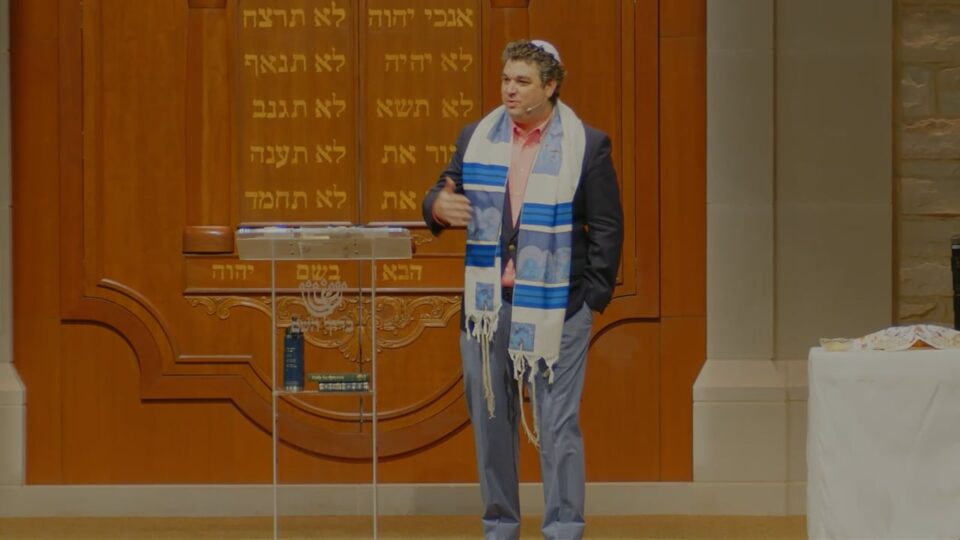
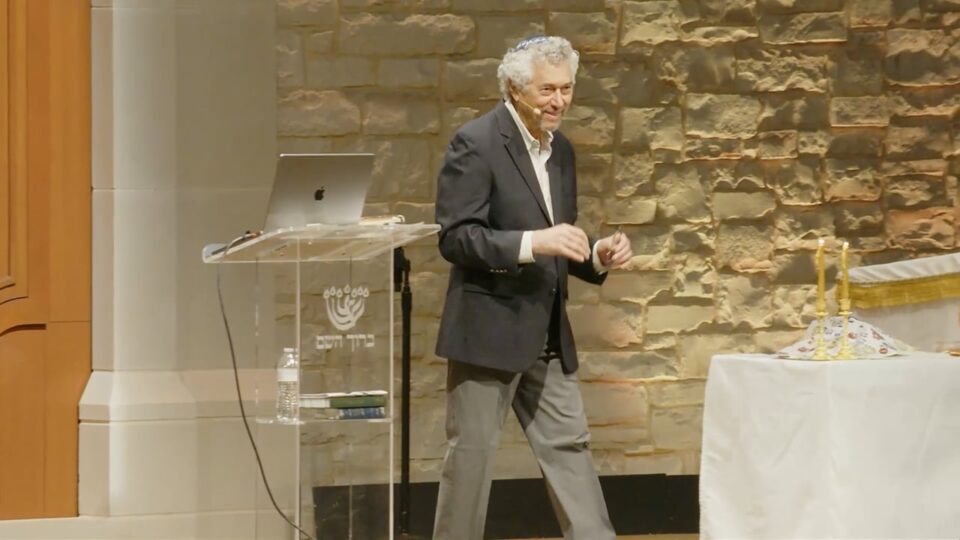
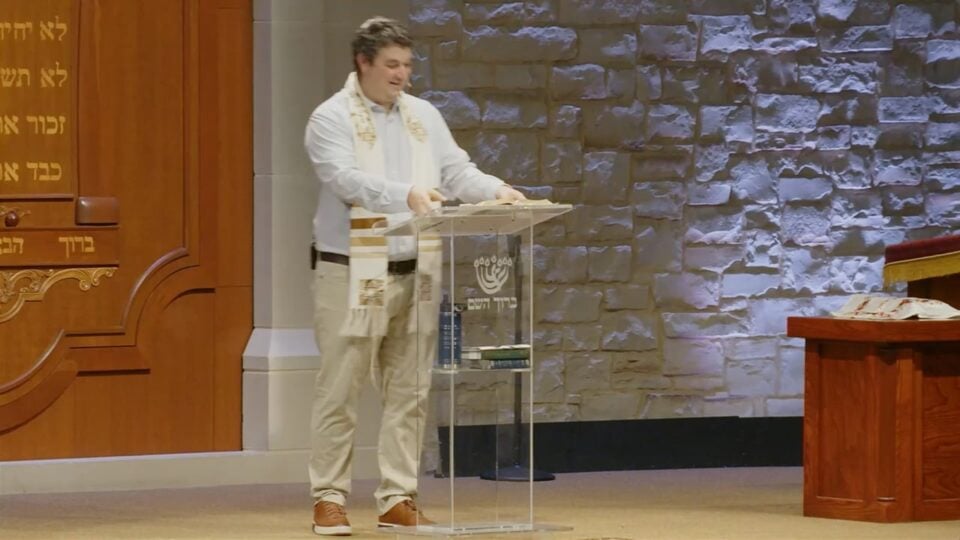
Rabbis Ari & Marty Waldman•Acts 15•March 22, 2025
Timestamps seek whichever format is playing — video or audio.
0:01 We are continuing our series in Acts 15, but as I've done for now, I guess it's been about 17 months to give you an update on the Middle East on what's going on there Remain 59 hostages in captivity, 24 of which are thought to be living. And I, I received a request from, from, uh, a leader in Israel, uh, this week to pray for Israel, especially during this time because society is very divided, uh, as Israel's gone back
0:50 to war, uh, uh, and, uh, with the potential consequences for the remaining hostages. Uh, and also Israel, uh, I think it was maybe the foreign minister, I can't remember who, um, is considering annexing a part of Gaza for every, uh, hostage that is harmed. I don't know if you really understand the, the, the consequences of that. Uh, Israel has refused to annex any land since 67. Uh, the West Bank remains the West Bank, even though it was won by Israel in a war of aggression against Israel, as has Gaza.
1:40 But this would, this would make Gaza part of Israel, uh, if they annex, begin to annex parts of Gaza. We are having in a, in, uh, a little over a month, a survivor from October 7th, someone who survived the, uh, the, um, invasion of Israel from Gaza. And this is, this is what he wrote. His name is G***o Kohan. I'm truly exhausted. It's not just fear, it's exhaustion, anger, and the painful clarity that no one outside ourselves truly understands. What it means to live like this, it's knowing that your home, the fields
2:26 and the streets you grew up in will once again become a battlefield. That sirens and shelters will replace any sense of normalcy, and that whatever happens, no one can give back what was lost on October 7th, because that's another issue. The fact that we're still in this position doesn't give any kind of confidence about what's going to happen in the near future. Amass was assembling, uh, and, and moving, um, how shall I say, stuff around this week for what appeared to be another ground invasion into, or ground incursion into Israel.
3:12 And that's when Israel resumed airstrikes on Gaza, Lebanon, and Syria Simultaneously, uh, Israel has now eliminated, uh, I think the last count was somewhere around 10 of, uh, top Hamas leadership just in the airstrikes this week, Israel has now issued evacuation orders for civilians to move toward humanitarian zones near water, and Gaza, Hamas resumed launching rockets into Israel. The Houthis sent a ballistic missile, uh, at Israel, and all of Israel was awakened at, I think it was four o'clock in the morning, Syria. I didn't say this last week, but I'll say it this week.
3:59 Uh, rebel forces murdered, uh, all the white mus, uh, Muslims in Syria and Christians, I think it was 70 Christians that I think they were crucified. They were at least murdered. I can't remember how last week. Um, some quite interesting, uh, other pieces of information. There is a country that's not recognized as a country yet internationally, that's called Somali Land, uh, which is the very horn of Africa. If you look at a map, it's where Africa almost touches Yemen, uh, and, and Somali land is, they've won their independence from Somalia, and they have offered to take residence from Gaza,
4:44 but only if their independence is recognized internationally. Uh, and then last night, Egypt issued a proclamation that they are willing to take 500,000 Gaza's, uh, into the Sinai Peninsula. By the way, e Egypt also, uh, mobilized. I can't remember how many tanks, but a lot of tanks to come into the Sinai also. So I'm telling you all of this so that you can remain, uh, in prayer, not fearful, but you can remain in prayer concerning what is going on in Israel and Gaza in the Middle East. Uh, come on up, you have a microphone. Okay, we are gonna continue
5:31 our discussion on Acts chapter 15, our dis our, uh, father son discussion, which I don't know about you guys, but I've enjoyed so far. Pardon me, as I get situated, situated here for a moment. We made it really far last week. I know you guys were expecting not
6:16 to make very far in Acts 15, but we covered some significant ground last week, and we made it into verse two. And, uh, it's funny because this always happens on Wednesday nights. In our discussions, whenever I'm teaching, we make it, we very rarely make it past verse two. Um, I discovered it must be a family gift. So we are going to be in Acts 15
7:04 as we continue this discussion. And Acts 15, it's a, you you might wonder why is, why are we spending so much time in Acts 15, uh, acts 15 for, for, I think, I can think I can speak for both of us in this regard. Acts 15 is a, is an extremely important moment, uh, in, in history. And it's important for the development of the Kingdom of God. But it, I think it's a particularly important for RK Hashem because really what the issue is, is there's a congregation in Antioch with Jews and Gentiles in the congregation,
7:51 and they're beginning to get some, some teaching that's contrary to what they are understanding from Paul and Barnabas. And so they send Paul and Barnabas up to Jerusalem to get a better understanding of what it means to be Jews and Gentiles who live in a community together. And that's why I think it's important for us as RK Hashem, because we, I could take a poll. I'm not going to, but I, I could take a poll and, and I would suspect probably half of your hands would go up on one side and half would go up on the other. And, and that's whether you're Jewish or Gentile, or I could take a pole and be hot or cold and you would be the same way. Um, but anyways, I it's of particular,
8:37 uh, importance to us because this is how we dwell together in community here at Brook Hashem. You wanna say anything in addition to that? Yeah, I think it's, uh, it's historically important because at this Point in Bible history, all of the believer, almost all of the body of the Messiah are Jewish. So we have a community of Jewish believers who all, or let's say most all, I'm not gonna say a hundred percent, but most of whom accepted
9:23 Yeshua as the Jewish Messiah, the Messiah of Israel, and didn't even think about the idea that he might be the Messiah for the Gentiles also. So this is a, acts 15 is a critical moment in the history because it is the moment of decision when we already have Gentiles coming to faith in Yeshua, but we don't know what to do with them. What do we do with these gentiles who are coming to our Messiah? What do we do with them? I mean, can they, can they really just come with, can they just come to Yeshua just like that? Or do they have to be, do they have to go through Bri Law, convert to Judaism and follow the, the Torah of Mosha?
10:11 So this is the big question. So the reason it's important to us, one of the reasons Ari already mentioned is because that's how we operate as a congregation, Jews and Gentiles together. But one of the reasons is it's important is because we are facing now today in 2025, a similar question that the church is asking now, what do we do with all these Jews that are coming to Jesus Christ? And it's a very similar time and circumstance as Acts 15. So it's almost the inverse. And I shared with you before that I'm, I'm part of a, a global ministry
11:00 called toward Jerusalem Council two, dealing with this very issue and dealing with the original schism in the body of Messiah, which was between Jews and Gentiles. So here we find for the very first time, all the leadership of the body of Messiah, which today would be known as the Body of Christ, right? But your, most of your Bible translations that you read, I don't know if you all read, I don't know which translation you read, but this is the, this is the Nu American standard. That's not the authorized version, though. No. Yours is their authorized standard mine's the authorized version authorized by bro. Right? Um, but,
11:47 but my, my version translates all the, every, every time it says the Body of Messiah or the Kayla, or, or, um, the Assembly of Believers, it calls it the church. In other words, when we read in Acts, um, earlier in Acts, it says that, that Paul, or not Paul at the time, but Saul or Shaul at the time, was persecuting the church. And we think, wow, there's another reason to hate the Jews. You know, this Jewish rabbi was persecuting us. The church actually, the what, the, what the context was that Rob Shaul
12:35 or the apostle later the Apostle Paul, before he became a believer, he was persecuting the Messianic Jews. He was persecuting his own Jewish people who had become followers of Yeshua. And that still happens today, by the way, still does. But we're in a moment in history now when I believe that the leaders, the current leaders in authority of the body of Messiah, which is in the church, not so much in Jerusalem anymore, um, need to make a decision just like the Jerusalem Council made the decision in Acts 15. What do we do with all these Jews? We d we, we already know what to do.
13:21 We're forming congregations. We're going out and sharing j you know, Yeshua with other Jewish people. We're on the move. The Messian Jewish community is on the move. We're not stagnant now. We're not sitting around waiting for somebody to tell us who we are. But because of the prevalence of antisemitism in his, in the historic church, and the prevalence of replacement theology or supersessionism in the, in the church that replaces Israel with the church, the new, the quote unquote new Israel, uh, these issues have to be addressed. And they have to be addressed today so that the church, our brothers and sisters in the body of Christ,
14:07 who are not Jewish all over the world, in some way, I believe, are shooting themselves in the foot. I'm getting broken knees, but they're shooting themselves in the foot because many of them are praying for the soon coming of Yeshua. And Yeshua said to the Jewish people, you won't see me again until you say blessed. It is he who comes in the name of the Lord. So it's his, it's a historic moment. Acts fifteen's a historic moment for the body of Messiah. And we're living in a, like moment in this day, just the inverse of it. Anyway, so there you go. So that makes you and me kinda like Paul and Barnabas. That's right. Which one of us is Paul and which is Barnabas.
14:52 I would be Bar Barnabas Was older. I would be, I would be Barnabas. 'cause Anyways, so here, let's, let's take a look. We're, we're gonna reread the verses the first two verses from last week so that, you know, just in case you forgot where we were, uh, now men, this is Acts 15 starting verse one. Now, some men came down from Judea. Were teaching the brothers, unless you are circumcised, according to the custom of Moses, you cannot be saved. When Paul and Barnabas had a big argument and debate with them, the brothers appointed Paul and Barnabas with some others from among them to go up to Jerusalem to the emissaries and the elders about this issue. So they were sent on their way by the Antioch community, and they were passing through Fania
15:39 and Samaria describing in, in detail the conversion of the Gentiles. And they were bringing great joy to all the brothers and sisters. So, I, I just, I have a, I think I have a map for you this week. See if it'll, it'll work. Can you guys pop, uh, my map up there? Maybe? Oh, technology will catch up in a moment, I hope. Okay, well, I was gonna show you a map of the Middle East, but if you remember, they're in Turkey where Antioch is, and they're coming down south, and Fania is in between, uh,
16:25 Fania is like modern day Lebanon and into where Syria touches the border. And, and they keep coming down through, uh, Fania and Samaria. But here they come and they, they're, they're, they're giving a report to all these congregations. Why are there congregations in between Antioch and Jerusalem? Well, here's the interesting point, because in Acts chapter 11, which we looked at last week, uh, just for a moment, uh, that was the first time that we see that some people were being saved in Antioch. But it was unusual because up until that moment, um, because of the persecution of Stephen
17:11 persecution, or the death of Stephen, I should say, the death of Stephen persecution arose against the Jewish believers, against the Messianic Jews in Jerusalem. And so it drove many of the Messianic Jews out of Jerusalem into Samaria in even further north into FIA or Lebanon, and even further north into Cyprus and other places, until a couple of them came to Antioch. But up until that moment, acts chapter 11 tells us they spoke only to the Jewish people about Yeshua. They hadn't broken through to the Gentiles. But in Antioch, this is the interesting thing,
17:58 when they came to Antioch, some of, some of the Mexican Jews came to Antioch. It says, a couple of them began to speak to the Gentiles. That was a big deal. A couple of them began to speak to the Gentiles. And you know what, something crazy happened, the Gentiles began to believe in Yeshua. So when they were coming back down after this controversy verse that Rabbi Ari is talking about, they came back down and they said, they, they began to share this conversion experience. He says in verse three, in Acts chapter 15, verse three, describing in detail the conversion of the Gentiles.
18:45 What does conversion mean? It means that the Gentiles were turning away from idolatry and turning to God the only true God, the God of Abraham, Isaac, and Jacob. Is this the first time conversion is used The term, first time I remember it, We didn't talk about that, but I just am thinking about this. It's, it's quite interesting that we're talking, we're talking about the question is, the question on the table is, can you be saved if you're not circumcised, which is the final element of conversion to Judaism, Right? Exactly. But here we have conversion only mentioned in regards to Gentiles. Yeah, that's right. Not Jews, by The way. So, so, but, but here, conversion only means to turn.
19:33 It has nothing to do with the Jewish, how should I say it? The ritual, Jewish ritual. It has to do with faith. And, and so gentiles were converting, and, and this is even more spectacular, these Jewish people that had come to faith in Yeshua were rejoicing in the idea. That's awesome. Gentiles are coming to the Jewish Messiah, to our Messiah. So when they arrived in Jerusalem, they told they were welcomed by the whole community there. This Reminds me, we didn't talk about this either, but it reminds me a little bit about your story when you came to faith
20:18 and you were in that, was it Pentecostal church? And somebody whispered to the pastor that you were son of Abraham or something like that, and he got up with his booming voice and said, praise the Lord. A son, son of Abraham has come back to his Messiah. So that, It's interesting. I'm saying that because the, the mirror image from then to now is, is similar since we're talking about the mirror image from, from Acts 15, the ruling to the modern church. I just, sorry, I just a little off topic, but No, no, it's fine. It's, you know, it's what, it's what's happening yesterday. So they, they, they're bringing great joy to all the brothers and the sisters. And when, so here, they're going up to Jerusalem
21:05 by coming down from Turkey, uh, from modern day Turkey. And, and we talked about that. I think we talked about this last week. We did It, it indicates to me that if Luke is not Jewish, at least he's extremely familiar with Jewish custom, that you go up to Jerusalem, you don't go down. Uh, He may have been converted, Maybe. So this is, this is something odd. And I'm, this is another side, kind of another rabbi side. But today, well, for the past 50 years, I've been a believer now walking with Yeshua for about 50 years, for the fa past 50 years. If I go to a church, maybe not as much today as it was years ago, but they would always say, oh, you're a converted Jew.
21:54 And I said, no, I never converted from a Jewish identity. I never converted from Judaism. I'm a converted sinner. So Gentiles back then, maybe not always today, but Gentiles back then was synonymous with pagans, because Gentiles worshiped idols and other gods. So a gentile to convert means that he did turn away from his gods and turn to the only true and living God, the God of Abraham, Isaac, and Jacob.
22:39 So that's a big deal. That was a very big deal. Technology just caught up, by the way. And, and we had the map up there. I don't know if you saw the map for just a second. Can you bring the map back up? You popped that map. Map back up. I don't know if it was. Yeah, here we go. There it is. There's Antioch up at the top, just at the border of what is Syria, modern day, Syria and Turkey. And by the way, I mentioned this last week, but Antioch is the first time that the believers were called Christians first time. And so Paul and Barnabas make this trek down here following the coastline, mostly, uh, until they go up to Jerusalem and the interior portion of what is Samaria and and into up to Jerusalem. So here we have in verse four, are we done with verse three?
23:27 Yeah. You see how fast we're moving this week? We're already passed. Verse three, when they arrived in Jerusalem, they're welcomed by the community and the emissaries and the elders. They reported all that God had done in helping them. So I just wanna point out that their community was all Jewish. We're talking about at least 10,000, maybe more than 10,000 Jewish people who had come to faith In Jerusalem. In Jerusalem, probably more than 10,000, probably multiples of 10,000 who are Jewish believers in Jerusalem. And they, they have formed a community, I would say
24:14 first Messianic congregation of Jerusalem, Right? Like First Baptist Church of Dallas. What would that be? FMCJ first met, nevermind. So, so here, here, the community welcomes them. And then it tells us, gives us this understanding that there's actually a governing structure for the community in Jerusalem. They have the emissaries. The emissaries are the apostles. They're the ones who were sent out by Yeshua, but they also have elders.
24:59 And I, I find that interesting because it's not just a bunch of individuals who believe in Yeshua. They are actually governed by emissaries, by the apostles, and governed by elders. And so they came to report all that God had done among the Gentiles. So, go ahead. Okay, so here they reported all the God had done in helping them. By the way, you'll, you'll recall, Barnabas was a part of this community in Jerusalem. And, and then Barnabas, Uh, was sent, Was sent out, sent To Antioch, and Made his way up to Antioch. And then realized, and Antioch, what's going on there with Jews and Gentiles,
25:44 and realizes, Hey, I need to go get Paul. Why Paul? Because Paul was called by God to be the apostle to the Gentiles. And here now we have, we have now a significant number of Gentiles, not just a household, like we had in Acts chapter 10, the household of Cornelius, which was also a significant thing. But now we have numerous households of Gentiles in Antioch. And so Barnabas says, wait a minute, my buddy Paul was called by God to minister to the Gentiles. I'm gonna go get him. By the way, I think it's important for all of us. My dad and I had this conversation this week,
26:31 but it's important for all of us to understand. Paul was the primary persecutor of the Messianic community. Barnabas put everything that he had on the line with the, with the rest of the apostles in Jerusalem and the Jewish community, and the, and the Jew and the Messianic Jewish community in Jerusalem for the sake of Paul Barnabas. It seems to me, the way I read it, Barnabas seems if he, if he wasn't eligible to become the 12th apostle, when, when, when, uh, Judah vacated his spot, uh, which I think he was eligible for it, um, if he wasn't, Barnabas is at least very influential in the, in that early community.
27:16 And he put everything that he had on the line for Paul's sake. And Well, you can imagine this guy, Saul of Tarsus, who grew up in Jerusalem under the tutelage of, uh, Gamal actually, of, uh, of, uh, Hillel Gamliel. And, uh, and here this guy's been persecuting us. And he shows up now and he says, Hey, I'm a believer. What is, what's the first thing that goes through your mind? This guy is a plant. He's a plant. He's, he wants to persecute us, but now he wants to get inside and find out where everybody lives and who, everybody what, who was involved.
28:02 So this is when Barnabas stands up on his behalf. It's quite an interesting thing. So let, let's take a moment now. I think now's a good time, even, even though we're plan for the next verse. I, I think it's important moment for us to talk about the, the community in Jerusalem is not what I would call monolithic. It is extremely diverse. In fact, if you look at Yeshuas, just, if you just look at the 12 Apostles, they're very diverse in terms of, uh, who they are, where they're from, and, and, and even their politics. If I remember right, one of 'em was called a zealot. Yeah, Simon. Yeah, Simon, the zealot.
28:47 Yeah. So the zealots, that's a political party, by the way, during this time period. Um, there's, we all know there's Pharisees and there's Sadducees. And, and I think that's probably the extent of most people's understanding in terms of the diversity of Jewish practice at this point. Um, but there's also, there's Essenes. They're the ones who Separatists. Yeah, yeah. They, they, I always, I always liken it to, they're the one who stand on the side of the road wearing old clothes. And it says, the end is near. Um, Actually, they were Jewish. They were Jewish separatists who felt like the temple
29:34 and the pre the priesthood had become corrupt, which it had. And so, rather than try to reform from within, they separated themselves and they moved to d various places. One of the places they moved to was to the, to the Dead Sea. So that's those, they are the ones who penned the scrolls that, that we called the Dead Sea Scrolls. It was the Enes, and they lived in Rome. They lived in other places, but they were sep they separated themselves from the, uh, from the temple and from the Sadducees or the, the, the, the Levites who were then overseeing the temple. So there's this broad spectrum of, of what I would call a diverse body. In fact, if you go back
30:19 and look in Acts two, it, it's not just diverse in terms of, um, religious belief or practice, but in terms of even which part of the world the Jews were from, you know, it lists off all of these, I think there's like 10 nations listed in Acts two, where they all came, you know, in more than 10, when Peter, when Peter stands up and it says, you know, all, all 3000 came to faith, but they're all from all around the world. And they're, they're now here in this group with a broad, uh, diverse expression here. And I'm saying that because here we come to this next verse, verse five, it says, but some belonging to the party of the Pharisees who had believed, in other words, who, who came to faith in Yeshua stood up saying it is necessary
31:08 to circumcise them and to command them to keep the Torah of Moses. Or if you could want to emphasize that a little bit different and says, instead of saying it is necessary, you could say it is necessary. And by the way, this was not so far fetched. You know, we looked at this for a moment last week in, in Exodus chapter 12, where Moses says, God says through Moses, any Gentile who wants to become, who wants to partake in the Passover, must be circumcised. An uncircumcised Gentile may not partake in the Passover. So it wasn't so far fetched for, for Pharisees
31:56 or some, it, you know, my New American standard says certain ones. So I take it to be the certain ones of the Pharisees who, who were more committed to Jewish life and more committed to the understanding of Jewish practice, as has been practiced under the Risa system. And they, but, and they retained that even though they became believers. So certain ones who we may, sometimes I wouldn't call them, but sometimes somebody may say, well, they were agitators. Well, they believed it, they were conviction. It was their conviction. So they stood up and said, it is necessary for Gentiles to become circumcised.
32:41 Look, if we're gonna have fellowship, if we're gonna do Passover with us, especially if they're gonna do partake in the best and greatest Passover, which is Yeshua, the Lamb of God, who takes away the sin of the world, they have to be, they have to be part of us. They have to be part of us. So it wasn't un it wasn't unheard of or unreasonable, but it wasn't true. It wasn't right. So here, this is the question at hand. We've heard it once in verse one, and we've heard it again here in verse five. The question is, can you be saved apart from circumcision? In other words, what's necessary? Maybe I can put it this way. What's necessary for God to recognize their salvation?
33:27 So, so this is because the word circumcision is used in Hebrew. It would be Bri Law. I mentioned it last week, the covenant of circumcision, which was given to Abraham. So, so keep in mind this is, this is not just a bunch of individuals who are gonna get saved and, you know, then they'll be saved individuals. No, they're gonna be part of a community, which is the Messianic Jewish community. And the Messianic j Jewish community to this point, primarily had, had, had still been considered part of the greater Jewish community. And so, so it wouldn't, it's, it, it would make sense and would not be unreasonable to look back
34:14 and say, look, Everybody in Abram's, Abraham's household had to get circumcised to be part of Abraham's household, which became the household of Israel, right? So it's not that farfetched to say they must be circumcised to become part of our household, but God is doing something new. That's why we're calling this, these series Mess of messages. A paradigm shift. The Acts 15 paradigm shift. 'cause there's a paradigm shift here. It was started by Yeshua. He is the one who started the paradigm shift. But here are the apostles and the elders in the, in the place of AAU author
35:00 who are sitting in the place of authority making rules for the Messianic community. They have to make a decision. And the question before them is, is it necessary? Now they're saying a group of saying it is necessary for them to, to experience Bri law and then observe the Torah of Moshe, in other words, to convert. And the, the, the final act of conversion is Brittany Law for a man. Anyway, I I I, we were driving in this morning together, and, and my mom asked a question. She said, maybe you should define what paradigm shift means, because maybe not everybody here understands the word
35:46 paradigm, or, or what that, what's, what's, uh, what's con what's in that connotation. So I just decided I Google it, you know, like any good rap does. Uh, and a paradigm shift is a fundamental change in approach or underlying assumptions. So there are some underlying assumptions up to this point, which are going to be fundamentally changed, Right? Or shifted. And one of those assumptions is that if you're gonna be part of the household or the community of Israel, you have to be circumcised. You have to experience Britney law. That was one of the, that was one of the assumptions. So, can I ask a, a touchy question?
36:31 You asking me of them? I'm Asking you. I, I think this is a question probably that everyone has and that very few people discuss openly, which is, what does it mean to be saved? Yeah. That, like, what is salvation? That's a very good question, and I think it's pertinent because we run it, run into it in Acts 15 over and over Again. In fact, may we will pause for just a second. This question came up on Wednesday night. Is salvation or saved in this context, in the mindset of those here, uh, who are experiencing all of that? Is it, is it a here and now thing? Is it I'm being saved from Roman persecution?
37:16 Or is it a, um, hereafter thing, a a world to come thing, you know, from one place to another? Uh, lemme start with what it's not. And I'm, I'm now going to relate to our era, you know, the modern era, what it's not, and what many Christians have been taught that it is, is all of a sudden you, you call upon the name of Yeshua, and bam, you got a ticket to ride, you got a ticket to heaven. You know, yes, we want you to come here every Sunday, and yes, we want you to hear the preaching. Um, but that has nothing to do with your salvation. So I'm not, I don't wanna be too harsh, because not everybody thinks that way,
38:01 but salvation is not a room like it is in Israel. When the bombs start to fall, the rockets start to fall. You run to the safe room, right? The salvation room, the safe room. But salvation, spiritually is not a room. Salvation is a walk. In fact, Yeshua describes it as the narrow way, not the Broadway, the narrow way. And it's a walk until you get to heaven. Can I say it's a walk to heaven and not a flight? Yes.
38:51 So yes, something happens immediately. Something does. If I'm worshiping idols and I turn to the living God, that happens immediately. And the scripture tells us that in Yeshua, Then Yeshua lives in us, and we become filled with His Holy Spirit, with God's Holy Spirit. And it gives us the desire to go on that walk on that road with him. It doesn't, it's not a road. It, salvation is not, um, how should I put this? It's not dependent on circumcision, because it's a faith walk.
39:36 It's by grace, as UL puts it by grace through faith. And we're gonna see in just a moment, in Acts 15, it's embarrassing to some of these people who are saying, you've gotta be circumcised and follow the blog. Moses, when Peter stands up in this conversation, we're gonna get to in a second, he says, Peter says, um, this is what happened to all these gentiles in Acts chapter 10. And God did it, God put the Holy Spirit in them before I even finished my preaching. And then, and then it goes on, and James speaks, and he, and he, and there's a slap, I hate to say this, there's a slap in the face.
40:23 And, and he, and the slap in the face says, Hey, we Jews get saved the same way as they do, the Gentiles do. Ooh, that's a slap in the face for some of us who are Jewish. You know, you know, because we thought we were a cut above the rest. We thought we were, I I Missed that. What was that last? A cut above the rest. So, So in terms Of, so, so salvation, salvation in, in Greek is soso. It means, it means that you've turned toward God and that you've come into the place of the Lord.
41:09 And scripture tells us, we are now citizens of heaven. We understand that intellectually, but are we gonna, are we gonna act like citizens of heaven while we're citizens of this earth? That's a big question. Are we going to, are we going to, um, manifest being a son of God, a daughter of God? Are we gonna manifest it? Or are we just gonna say that I am, the world is watching. And so in Hebrew, The, the word for salvation is Yeshua, like the name of our Messiah. It comes from the root yesha, which means to turn
41:56 or to be saved, or to be, um, set apart for God. So, so there is a salvation experience. But then Paul says to us in his letters, walk out your salvation with fear and trembling. Not that you're not saved, but walk it out with fear and trembling. So anyway, I don't know if that's a good enough answer or not about salvation. Enjoyed it. You enjoyed it. So, so the question here is you can't be saved, but the, but the, the, the question behind that question is, you also cannot be part of our messianic community unless you're circumcised.
42:42 So, so this is a big question. Can you be saved? And they're gonna answer this question. Can you be saved a, apart from being circumcised or converting to Judaism? You wanna go on to the next verse? Yeah. Okay. So we're gonna move on to verse six. By the way, we have, we have high hopes of how far we're getting today. We'll see, the emissaries in the elders were gathered together to examine this issue. What's the issue? Circumcision and salvation. Uh, after much debate, Peter stood up and said to them, brothers, you know that in the early days, God chose from among you that by my mouth, the Gentiles should hear the message of the good news and believe, do you want me to read this whole part
43:29 and then come back through? You can, yeah. Okay. And God, who knows the heart testified to them by giving them the kodesh, just as he did also for us. He made no distinction between us and them purifying their hearts through faith. Why then do you put God to the test? By putting a yoke on the neck of the disciples, which neither our fathers, nor we have been able to bear. But instead, we believe that we're saved through the grace of the Lord Yeshua, in the same way as they are. This is really what you were just talking about, right? So this is the first rebuke,
44:14 No, the first rebuke. Okay, go ahead. No, No, I was just, I was making off comments. So The first rebuke was God is testifying, first of all, again, in verse six. He's saying, the emissaries and the elders were gathered. Not the whole thousands of people in the congregation. The people who were in authority gathered together to decide this question because they were in the seat of authority. Remember, he, uh, remember Yeshua gave, he said, don't follow the people who are in the seat of the, of Moses 'cause of, you know, in the seat of authority with Moses. And then he says to them, he looks at his disciples
45:01 who became apostles, and he's giving, he says, you are now in the seat of authority of court. The whole Jewish community was not gonna accept that, but the Messianic Jewish community was going to accept that because they are now in the seat of authority. Like Moses is in the seat of authority. So the el the emissaries and the elders, um, you know, they, they took up the issue. And there's a great debate. That's when Peter stood up, shared his testimony from Acts 10 as testimony that Gentiles can get saved without being circumcised and all that. And they were God fearers. They were. And then the first re, the first rebuke
45:47 comes in verse eight, that you read Aria and God, who knows the heart. Remember God knows the heart. Excuse me, I'm standing up again, even though it, it's a little bit sore. But this is important. When God chose a king for Israel, not King Saul, because King Saul lost his position, turned away from the Lord. But God went to Jesse Isha to Bethlehem and said, where are your sons? 'cause God told him to go there. And so he brings all of his sons out,
46:36 and he discerns from the Lord that none of the, none of Jesse's sons are the, are it none of Jesse's sons are the one to be, is the one to be anointed. This is all from first Samuel. And he turns to Jesse and he says, don't you have any more sons? Well, I got this, got the kid, you know, the baby, the runt of the litter. He's, he's taking care of the sheep. So he calls David in from, from the sheep. And David comes. And immediately God tells Samuel, this is the one.
47:24 And he and Samuel Says, this is the one. And Jesse says, wait a minute. He's, he's the runt of the litter. Look at these. My other sons are strong. They're, you know, tough guys. And that's when Samuel says, through the Lord, the Lord says, through Samuel, God does not look on the outside. He looks on the heart. And can I take it a step further? We, Jews are still called to circumcise our sons, but God is not looking at the circumcision. He's looking at the circumcision of the heart, not the flesh
48:14 of the heart, not the flesh. He said that to Israel many times. Even Moses said it in the Torah, circumcise your hearts circumcised your hearts. So I want, I want everybody to understand that because I'm not talking against Jewish tradition. I am talking it. I am saying, we need to know that our hearts are circumcised. Jewish ritual is not gonna get us to heaven. Christian ritual is not gonna get us to heaven. God looks on the heart. So this is the first rebuke. I think God knows the heart.
49:04 That shouldn't be a rebuke. God knows the heart. And God testified to them, to the Gentiles by giving them the Ruach, Kodesh. He could. He testified to the Jews also, just as he also did for us. The verse says, God testified. So here's God's testimony. What is God's testimony? God's testimony is he poured out his spirit upon the Gentiles, just like he did to us. And you know what? That was difficult for many Jewish people. Why jealous? Maybe.
49:53 But there was a, a, a, there had to be an understanding now, because the, the Holy Spirit was a promise that was made to the Jewish people, to Israel, a promise made to us. And now God is putting this promise made to us on people who are not us. And it was astonishing. You read Acts 10, again, it was astonishing to the Jews who were there and saw it in person. It's astonishing now, just by the testimony that, that God gave, and they are witnesses of giving this, this testimony. And so this is, this, this is a, a real upheaval. And that is usually
50:38 what happens when a paradigm shift takes place. There's an upheaval because there's a shift. There's a shift. What happened with Cornelius is so important that it's the account is, is, is given to us in Acts 10. We're told the whole experience again in Acts 11, and then now we get it a third time in Acts 15. Yeah. And here's, here's the second part of the, the rebuke, right? He made no distinction between us and them. Oh my gosh, I thought we were special. We're All Special. I thought we got 10% off. But,
51:27 Well, you know, I don't know. Some of you here are old enough to know somebody named Zola Levit, who, who passed away many years ago, but he had a radio show and a TV show, and still has the Levitt show somewhere. Um, but Zola used to say, um, you know, there's no distinction between us and them. And, um, I said that, maybe I said this already, but God, he, he used to say, God must have really loved the Gentiles. He made so many of them. Hmm. But this, this was, this was a sticking point. And it still is, by the way.
52:14 There is no distinction between us and them. What does that really mean? We're talking about the focused word of salvation. God has opened the doors now of salvation to the gentile world. And back in that day, to the pagan world, which sounds much worse than the gentile world, the pagan world, he opened up the doors of salvation to the pagan world. And it was a real rebuke for those who were standing up and saying, they must be circumcised to be saved. So if there's no more distinction, that means there's no more Jews or Gentiles, right?
52:59 How did you guess that? Oh, Paul wrote about it. No more Jews and Gentiles. But what about there's no more men and women, no more male and female. Well, we're just men and men up here. Yeah. Okay. Between us, there's only age distinction, right? But if there's no more Jews and Gentiles, And there's no more male and female, then there must Be no more male and female, which means we're all the same in here. What does that, that means transgenderism is okay, Maybe I'll put it in a positive manner. I love the fact that my wife is different than me.
53:49 I suspect all of the men in here who are married love the fact that their wives are different than them. So the distinction here that he's talking about when he says no distinction, is anybody, male, female, Jew, gentile, slave, or free, everyone can receive the good news of Yeshua, of salvation. Everyone. There's no boundaries. No boundaries. Why then do you put God to the test? If there's no distinction about salvation,
54:36 why do you put God to the test? Putting a yoke? Wait a minute, I thought Yeshua said, my yoke is easy. My burden is light. But this is different. This is a different yoke. Why do you put God to the test by putting a yoke on the neck of the disciples, meaning the gentile disciples, which neither our fathers nor we have been able to bear. What's that kind of a yoke? So I, I've, I've been around, What's that kind of a yoke? I've been around the Christian world long enough to, This is no yoke to Listen. Don't joke about the cost of yolks today.
55:23 They're very expensive. Uh, I've heard probably more times than I care to say that the yoke is the yoke of the Torah. Ah, but, but King David said the Torah is like honey, it's sweet. Like honey, in Psalm 19. Yeah, I read that this morning. He, he didn't, he he Didn't. Oh, you missed it. You weren't in here for the start of Service. That's right. I, you're right. Um, he, he didn't think it was a yolk, a, a burden. I mean, So if he didn't think it was a yoke, and, and what I suspect most, most Jewish people who find their delight in the Torah, when you find your delight in something, you don't find it
56:11 yolk some no burdensome, uh, then what are we talking about here? If it's not the yo? Because it is clearly, he says the tour of Moses. What, what, what, what happens when you combine two airlines, Al and Alia? I'll tell you, Val, I'll tell you. I I view this yoke as manmade, legalistic observance of the Torah, not the Torah itself, but what is beyond the Torah that's manmade. And it becomes legalistic. And if you don't hold up the legalism, you're garner
56:59 in those communities. So when I, when we spent, I don't know, two years in the book of Luke, I'm pretty sure by the end of the book of Luke, my saying almost every week was, Yeshua cares more for how clean the glass is on the inside than how much we polish it and make it look on the outside. That's, that's similar to what, So that's what we're talking About. That's similar to what Samuel God said through Samuel. God looks on the heart, not on the outside. So this is something that's not dealing with heart transformation. It's dealing with the way we present ourselves when we lack a heart transformation. That's right. Exactly.
57:44 So you, you had a story about that, didn't you? Didn't you know somebody who maybe not. I thought you I can't Remember that story. Okay. All right. It's your story. Well, you gotta jog my memory a little bit more. I can't remember what we were talking about. I was talking about you, you were telling me about, about some people who, who did everything right? And, but then they, they, they drew, they drew close to Judaism more and more toward Judaism, and they found bur Hashem Oh, yeah. To be, we talked about this on Wednesday night. Okay? It, it sometimes people love people who are not Jewish, love Jewish stuff so much that then they fall in love with Jewish stuff and not with Yeshua.
58:33 And They, and then they realize that EM'S not Jewish enough and they leave em and go to a synagogue. Because, because it is, it is more close to the expression of what, what you, this is always the argument. What Yeshua, what Yeshua did is more like what the synagogue did. Not like what em does because we're not Jewish enough. But I I, I don't think I've ever heard back from one of them saying that they've maintained their faith, Yeshua. It's very, most of 'em a very sad story as many of them, most of them, I should say, give Yeshua up. And, But I, I think it's that love. I don't know the love of stuff. I, if I can put it that way. Well,
59:20 Look, it's, it's easier, I think in many ways it's easier to follow a set of rules than it is to have a living relationship with the living God. And so, because you're dealing with a lot of unknown and a lot of hard work, work that has to be cultivated, if you're following a set of rules, okay? So you just, you have to remember to, to tie your knots on the seats, on your cheat seat, just right. And then you're okay, you know, uh, the mitzvah for many Jews, uh, and I'm just sharing with you from my own personal Jewish experience, but for many Jewish people who, who pray the sidor pray their prayers morning, afternoon,
1:00:05 and night, uh, they do it. Not many of them don't do it because of a heart connection with God. Many of them do it and say, you have to do it in Hebrew, because that's the mitzvah. And because that's the mitzvah. You learn Hebrew so well, and you know how to say it so fast, you know how to say it so fast that you get, you know, if you get to be, if you're done with all the prayers, first Is A winner. It's like, I'm the winner. You know, it's like I'm the, I do the mitz for the best. So I'm not saying that's true about every Jew by any means, many Jews have have a heartfelt relationship with God, for sure.
1:00:52 Um, but many Christians also do this. This is not just exclusively, exclusively Jewish. Many Christians go through a, a kind of a, a regiment of regulations and rules. And if you do it all right, then you're okay. I mean, maybe I can take it back to the story that Yeshua says, and he says, uh, don't be like the one who goes and prays and says, thank God I'm not like the sinner who's there next to me. Yeah, exactly. So anyway, just to finish up this rebuke, he says, Peter says, we believe in verse 11, we believe Peter
1:01:38 and whoever else, we believe that we are saved through the grace of the Lord, Yeshua. But I thought Paul was the first one to say that in Ephesians chapter two. Okay. Now there's a revelation, Peter, in Acts 15, No, this is Acts not revelation. So here's the acts of the apostles. We believe that we are saved through the grace of the Lord, Yeshua, in the same way as they the Gentiles are saved. That is a leveling of the playing field. To some it would be a rebuke to others. It would be a joy.
1:02:25 I want em to follow to, to fall on the side of this question of joy, salvation, we are saved the same way they are. Everybody comes to believe in Yeshua and have faith in Yeshua and walk with him the same way. Now, our walk may be, may be expressed in different, in different ways, but it's always expressed in righteousness, not in sin. Sinfulness, I want to say that. So you wanna move on to verse 12? Uh, what time is it? It's 10 46. Oh, 1246.
1:03:11 10 46. It's 10 46. I'd Be like, let's finish the chapter. Yeah, let's, I think we could finish. I, I think so too. Okay, go for it. Read verse 12. Verse 12. Then the whole group became silent, and were, and were listening to Barnabas and Paul, as they were describing in detail, all the signs and wonders God had done through them among the Gentiles. After they finished speaking, Jacob answered, brothers, listen to me. Simon has described how God first showed his concern by taking from the gentiles of people for his name, the words of the prophets agree as it is written. After this, I will rebuild, or excuse me, I will return
1:03:59 and rebuild the fallen tabernacle of David. I will rebuild its ruins, and I will restore it so that the rest of humanity may seek the Lord. Namely, all the gentiles who are called by my name says Otai, who made these things known from of old. We'll stop There. Yeah. Good. So, so Ari and I discussed this quite a bit, and it's, I think it, I don't know if it's an important distinction or not, but everywhere that you read in, uh, the diaspora or among the Gentiles, uh, you, you find the grouping of Paul and Barnabas. Paul's name is first, Barnabas name is second. When you're in the, in the diaspora, in the nation,
1:04:45 among the nations, and they're witnessing to Gentiles, Paul and Barnabas, Paul and Barnabas, Paul and Barnabas e Even when Paul, you know, when they wanted to, when they wanted to offer sacrifices to Paul and Barnabas, they said, look, Barnabas is Zeus, and Paul is Hermes. So, so, but, but, but even then, they still said Paul and Barnabas. But when you get to Jerusalem, it changes. And here you see the change. The whole group became silent. And were listening to Barnabas and Paul, I'm guessing Barnabas did most of the talking,
1:05:35 not Hermes, not Paul, because Barnabas was considered an elder in this community. Paul was still a relative newcomer, but they were talking about all, describing all the signs and wonders that had taken place among the Gentiles. It's interesting, isn't it? Because actually the scripture says, Jews require the sign. You know, Jews require a sign, but here the Jews are performing signs and wonders by the power of the Lord, the power of the Holy Spirit and Gentiles are coming to faith, I think is still maybe true today.
1:06:28 So Paul and Barnabas and Paul finished their relating of what's happened with them, the signs, the wonders among the Gentiles. They finished speaking. And now, now we've had Peter, So Paul, we had Barnabas and Paul, Peter. Now we've had Barnabas and Paul, by the way, Peter, actually, Luke gives us what Peter says. Luke doesn't give us what Paul or or Barnabas says. And now Luke gives us what Jacob says. Or maybe your translation say, James, this is, this is Jacob, the brother of Yeshua, who I, it seems to me, is now the leader of the Jerusalem community. Yes, that's right. He's, he's the head elder.
1:07:14 He's the head elder. And he says in verse 13, brothers, listen to me. Shimon is referring to Peter. He doesn't call him Peter. Yeah, I find that so interesting. He uses his Hebrew name Because this is a very Jewish context, a very Jewish passage, a very Jewish context. He says, Simon or Shimon has described how God first showed his concern by taking from the Gentiles of people for his name. So he is referring to Simon Peter's testimony in Acts 10, Which was just reiterated here, a couple verses prior, right?
1:08:00 He testified to that. But then he says something very interesting, and the words of the prophets agree, agree with Simon, agree with Peter, agree with the act of what, what happened, the actions of what happened in Acts 10, agree with what Paul and Barnabas or Barnabas and Paul were saying in terms of signs and wonders and all the Gentiles coming to faith. He says, the prophets agree. The prophets agree. Now, here's a guy from Galilee, you know, and the Jerusalem scholars always made, always made fun of people. Are, aren't they from Galilee? It's like us in Texas, aren't they from Oklahoma?
1:08:46 Excuse me, if anybody's from Oklahoma. Sorry, Joe. Um, more importantly, it's like people from New York saying, aren't they from Texas? Yeah, probably. So, anyway, I think the next, they sure sounds like they're from, I think these, I think these prophecy verses are very, very interesting. Uh, after this, the prophet he's quoting right now from, uh, Amos, after this, I will return. Who's gonna return Amos, the Lord. The Lord will return. And this is by the prophet Amos. He's speaking prophetically. After this, I will return and rebuild the fallen tent of David.
1:09:33 I find this so interesting. I will rebuild its ruins, and I will restore it. And the rest of humanity will seek the Lord, meaning, meaning the gentiles. So what is this re what is this fallen tabernacle of David Fallen tent of David? I find it very interesting, especially in light of, uh, Rosh Hashanah in, you know, the high holidays that come in the fall, the month before Rosh Hashanah, you have the month of Ellu. And in, during the month of Ellu, lots of prayers are said. People, you know, religious Jews get together every night and they pray. And, but there's a story that comes out of the Hasidic community, um, I think based on scripture, but the story that comes out of the Hasidic community, um,
1:10:21 which was told by the, by the Reba, by the rabbi of the Hasidic com of the Lovich Hasidic community. And he calls it the king is in the field. I've shared this message a number of times for those of you who heard it. You've heard it, new people haven't. But the king is in the field. And this, this verse reminds me of that passage. The king is in the field once a year. The story goes, the king leaves his palace, comes out to the field and lives among the people, and sets up his tent. Sets up his tent, and this ver and says, then everybody can come. Everybody's welcome. Everybody's welcome to the tent.
1:11:07 Because the king is there. He's not acting in his high rulership fashion. He's come to the people. He's come down from his hill down to the people. I liken it to Yeshua. Yeshua came down from heaven and dwelt among us In John chapter three. Uh, John chapter one, he dwelt among us, and we beheld him as the only true son of God, as the king, the Messiah. And so the, the, the king is in the field. The story of, of the king in the field says that everyone will come. Everyone comes. And it's a, during a month, a month long period. So there's a period of time when he comes
1:11:53 and a period of time he goes, it's like Yeshua. He came for a period. It was a short period time, and he left, came from heaven, and he re resurrected and he ascended back to heaven. But during the time he was here, he was the king in the field. And by the pouring out of God's spirit, he still is. Everybody, everybody can come now to Yeshua, because by the Spirit, he's remains in the field. And you and I, friends are carrying his spirit. And so when somebody comes to us, we have to act like the king in the field because we're representing him. And so this, this is so wonderful to me.
1:12:41 The rebuilding of the fall intent of Jacob is like saying David, king David, remember King David was an outcast. Saul was hunting him. But the scripture says, in describing David, all the different outcasts came to him, right? All the, all the weird, all the weirdos, All the people that were not walking according to Saul Saul's paradigm, there was a paradigm shift in his day too. All the people came and gathered to David. Well, God is going to rebuild that fallen intent of David so that all the people, and this is where I say in Yeshua, all the people can come,
1:13:29 all the people now, Jews and Gentiles alike, and that's the point. He's making. Jews and Gentiles alike can come to the king of kings and the Lord of Lords. Amen. Amen. All that, all that out out of a half a verse. Yeah. That almost makes me want to end on that. But there's a couple other things I think that, that I don't know to me are worth mentioning. Go mention It. So you, you just, you just mentioned Amos, but he says the prophets right? He doesn't say the profit, which means that there must be more connection, Multiple profits, Multiple prophets. Uh, one of which, uh, you and I discussed was, was Isaiah.
1:14:18 Isaiah says this in Isaiah 45, 21. He says, um, who has declared it of old? This is, this is by the way, what, what, um, what James says or or Jacob, he says, known from of old. These are the things known from of old who has the, who has, uh, I just lost my spot. Who has declared it of old? Is it not I the Lord? There's no other God beside me, a righteous God and a savior. There's none beside me. What I find fascinating is actually the prior verse, and, and in the prior verse it says, assemble yourselves and come draw together fugitives of the nations.
1:15:05 Yeah. Yeah. Just so here we have the assembling of the nations, following the God of Abraham, Isaac, and Jacob as a prophetic act of, in Amos it says, on that day or the great day of judgment, or, or, or it's a, it's a sign when, when, now maybe I'm, maybe I'm getting a little ahead of us, but it's a sign when there's Gentiles who come to the Lord and it's a sign that the end is near. Yeah. Well, it's a sign that comes from Isaiah chapter 11, when, when, uh, the Lord describes the prophetic word, when the Lord describes the Messiah as being hidden and now being revealed and um, and,
1:15:51 and talking about all the nations are flocking to him, and he becomes the glory of Israel and the light to the nations. Um, and I think that's the point that James is making here. He's, listen, listen to this in verse 17 of Acts 15, so that the rest of humanity may seek the Lord, namely all the gentiles who were called by my name. How many Gentiles were called by his name back in the day? Only those who came to Yeshua, only those who came to Yeshua. And that's still true for today. Still true. Today, all the gentiles who are called by my name will be part of rebuilding the tabernacle of David.
1:16:39 And when we call upon the Lord, we shall be saved. And at a certain moment, Yeshua is gonna come. We, we don't know exactly when that moment is, but we know what's supposed to happen. So keep, you have to keep your eye out for it. When the, when the Jewish leadership or the ma majority of Jewish people say, bar tonight, welcome, Yeshua. Come. Then Yeshua's gonna come. He's gonna sit on his throne in Jerusalem. And when he does that, everything's gonna change everything. He'll be the Lord of Lords, the king of Kings in practice. And according to Zacharia 14, Revelation chapter 21, all the nations of the earth will come up to Jerusalem.
1:17:25 And boy do I look forward to that day. I think that's a good spot to end. Okay. Amen. We have something to look forward to. May the Lord bless you and keep you. May the Lord make his face shine upon you and be gracious to you. May the Lord lift up his countenance upon you and give you peace. If
1:18:27 In the name of our Messiah, Yeshua Shabbat.