
Message
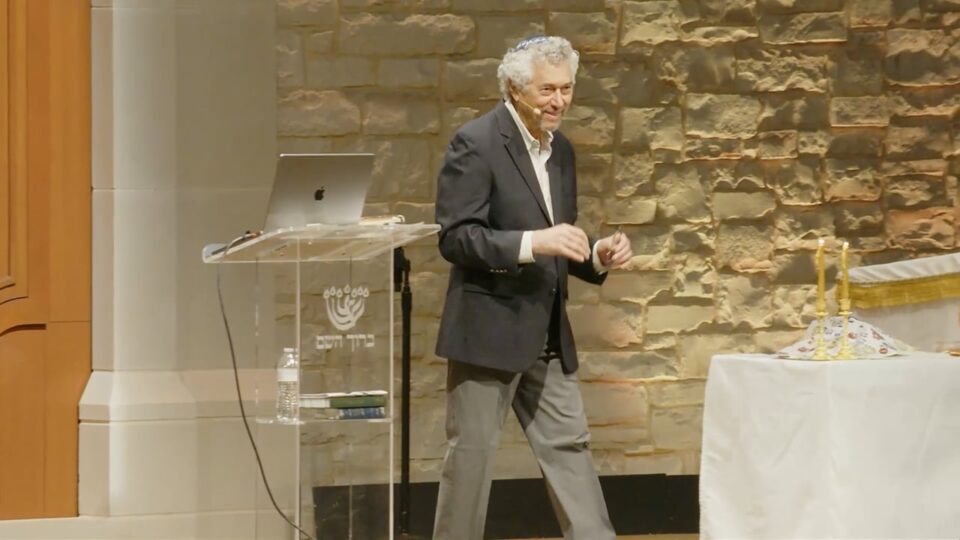
Rabbi Marty Waldman•Genesis 18•November 16, 2024
Timestamps seek whichever format is playing — video or audio.
0:01 At this time, I have the privilege of inviting the founder and former senior rabbi to the stage, rabbi Marty Wallman. Thank You, Father. We just come to you this morning just thanking you for your goodness and your mercy for years of faithfulness. Father, we see it from generation to generation throughout the text, but we are also privileged to see it here in this local assembly. Father, I pray that you would continue to, as you have done so many years.
0:47 Thank you Lord. Father, speak through him. Take all his prayer and preparation and let it reveal the true wonders of your word. Open up our hearts and our ears that we may receive directly from you. In the mighty name of Yeshu we pray. Amen. Amen. Thank you. I had to laugh when he introduced me as the founder made me think that she was lost, and I found her
1:38 almost five years ago. Rabbi Ari and I flew to New York to attend a, uh, a teaching seminar, and Sean was there too. Rabbi Sean, three of us went there and, uh, it was called the Borough Park Symposium. And while we were there, we started hearing these not quite rumors, but news kind of floating around about some disease that was, you know, that had come into, uh, the United States from China. And by the time the seminar was over, or by the time the, uh, week of teaching was finished,
2:29 sure enough, they, um, the reports were really coming in and Rabbi Sean and Rabbi flew back to Dallas. I I was, I flew to Israel at that moment. I was on my way to Israel. So we went our separate ways. And by the time I got to Israel, wow, just a little while after that, New York was declared as the epicenter of this disease. And I went, wow. We just, whew, we made it right out in time, you know? And so I spent two weeks in Israel about roughly two weeks or three weeks, something like that.
3:16 And, uh, by the time it was time for me to fly back to Dallas, the reports had definitely come in. New York is the epicenter of this thing called COVID-19. And my flight was a direct flight, not from Israel to Dallas, but Israel to New York. And at that point in, in, in the Covid history, if you recall, some of you who remember these kind of things, they told everybody not to wear a mask.
4:03 Whoa, that's different than what some of you remember. But they told everyone not to wear masks. And, uh, and why I think they wanted to tell everybody to wear a mask, but there was a shortage of masks, and they wanted to save the masks for the ho hospital workers, uh, who were attending the sick, entering the hospital. So I got on the plane, which originally was not a very full flight, but now everyone was escaping, not everyone, but, um, the epicenter of the COVID-19 in Israel was in Jerusalem. And not only in Jerusalem,
4:50 it was in the Ultra Orthodox Jewish community. And so they, they shut down all the Yeshi vote and all the, all the students, the rabbinic students, and number of the rabbis who were teaching in those yeshi vote, they, they didn't have anything to do there anymore. So they didn decided to go back to New York. So they just filled up all the empty seats. And, uh, many of them were wearing masks, which I was thankful for because they had just come from the epicenter of COVID-19 in Israel.
5:36 And, uh, anyway, it just turns out that while I was on this flight back to New York, I was on a, on an aisle seat. And all around me were these Orthodox Yeshiva students, or Yeshiva teachers. And, uh, but right next to me, the two seats right next to me on my left, strange, oddly enough, they were occupied by Two Christians, uh, who came from an kind of a denomination that most people would think is sort of an offshoot denomination. And so we started getting into a conversation.
6:24 They asked me, you know, who I was and why I, what I was doing in Israel, and, you know, et cetera, et cetera. What did I do? So I began to tell them, and they got super curious about Messianic Jews and, you know, et cetera. So this is a way, this is a way you can share the good news of Yeshua, which is, I call indirect evangelism. I'm sharing with these two Christians all about Yeshua being the Messiah and why I believe he's the Messiah and, and what I believe about Israel and the Jewish people and salvation.
7:09 And although I'm not speaking to any of the Orthodox Jews, they're all listening, of course, I have no way to follow up on them. I didn't know them, but I, I definitely know that they were listening, they were looking at me, you know, and listening. By the time it got to New York, to the epicenter of Covid in the United States, you wouldn't believe the airport. Have you ever been to JFK John F. Kennedy Airport? That place is packed. It's a madhouse.
7:56 It's, it's not unlike Ben Gurion Airport in Tel Aviv. You know, when I got to the airport to catch my flight, usually it's just packed. It's a madhouse. And I got there, no lights on. Dark Ur airport is dark. I'm thinking, okay, the, I just dropped off my rent car. I'm going, I've got a suitcase. I'm going to, I'm going in to catch a flight, and I'm, I'm having to really make my way through the airport. 'cause it's dark. No lights are on. It's weird. Finally, I see a light in a distance, and I follow the light.
8:44 And sure enough, there are one or two security guys there. They let me through. I get to my plane, I get on my plane, I land in New York, I get off at Kennedy Airport, and my gosh, it's not dark, but there's hardly anyone there, hardly anyone. Very weird. I get back to Dallas on March 15th, 2020, and on March 16th, anybody remember what happened on March 16th, the governor declares Texas is shut down, locked down.
9:32 So on the one hand, I woke up that morning on the 16th, and there was no noise, no cars, no cars on the, on the roads, no cars on the freeways. And I thought, how delightful. Wow, it's so quiet, it's wonderful. I thought, this is great. This could last asked. But the other consequence of lockdown, which I hadn't really considered, is that you couldn't go to other people's houses. You couldn't see anyone, you couldn't assemble here. You know, we went to Zoom and it made me realize, wow,
10:23 you can't really exercise hospitality anymore. You can't receive hospitality and you can't exercise. You can't give hospitality because everybody's locked down. I think a lot of people suffered during that lockdown period. I'm thankful that Texas wasn't locked down for a very long time. But in some places, some, some states in the, in the US were locked down for a very long time. And it caused, actually caused some psychological damage to some people. I'm sharing all this with you because I want you to understand how important hospitality is, how important that fellowship is,
11:13 that actually we are called to have with one another. Don't forge, don't forsake the assembling together of yourselves. And the early believers were given to a certain number of things, and they were given to the teaching of the apostles, the sl they were given to fellowship with one another, quinine, And to breaking bread. And during the lockdown, you couldn't do any of that. So I entitled this message today, welcome. I love the last song we did today.
12:02 Welcome kodesh, holy Spirit of God. Welcome. We, when we're singing that song, we're actually extending an invitation of hospitality to God's spirit. Welcome, come be with us in Israel. When somebody knocks on your door, maybe it's better like this. You open the door, and if you, if you know the person, generally you say, Barba, welcome. What do we have written here? You probably can't see it because of this screen.
12:49 What do we have written here under the 10 Commandments? We have Barba, ba, Adonai. Blessed is he who comes in the name of the Lord, which in modern terms translates to welcome in the name of the Lord. Welcome. What do we do without welcome? It's a tough life. It would be a tough world without welcome. I happen to believe and happen to see and think that this world is beginning to suffer a little bit of a dearth of welcome.
13:38 I think in some way, we are walking through Matthew 24. At the end of days, the love of many will grow cold And the welcome will be absent. Welcome is more than a friendly greeting. It represents way more. And I wanna share some of those things with you because I, I happen to believe and understand that welcome is one of the characteristics that believers and followers of Yeshua should express.
14:29 Welcome hospitality. I'm gonna take this from Viera, Genesis 18. Viera is Genesis 18 through 22. So it's interesting because in Genesis 18, you heard it earlier, Marcus was helping the children to understand this. But Abraham welcomed three visitors. Okay, look, he lived in the middle of the desert. You know, when three strangers come along and they're not carrying swords, you kind of figure they're friendly. And, and people expressed hospitality
15:16 much more deeply than we do today. And Abraham got up and went, ran to them as one of the children said, ran and said, please come. Let me wash your feet. Let me give you some water, some food, hospitality. So I wanna take Abraham's, uh, hospitality character. His not just his personality, but this is something that was part of his character for us. It's not just our personality. I have a personality. Look, I have a personality that, um, kind of would like
16:04 to be alone sometimes, but there are often times that I'm challenged and I have to say, okay, it's time to either receive or express hospitality and have some fellowship. So Genesis 18, what a chapter, an amazing chapter from Genesis, and it's an amazing Torah portion from Genesis 18 through 22 via. And he appeared, who appeared,
16:51 the Lord appeared in Genesis 18. I'll read that to you in just a moment, but I want to, I want to say that in Genesis 18, the Lord appears, and one of the things that he does is he prophesies, he prophesies over Sarah Abraham's wife, Saray changes her name to Sarah. He prophesies over her and says she will have a baby. Okay, look, she's 90 years old. You know, you wouldn't expect, and she didn't expect you have this, but he says, your wife is gonna have a baby.
17:38 And the, and she laughed. She was in the tent and she laughed. She thought it was, wait a minute, that's an impossible thing. That's funny. And the Lord says, why did you, did you laugh? She says, oh, I didn't laugh. Just so you know that God knows everything and hears everything. He says, oh yes you did. Oops, let me walk that one back. And so a year, he says, in, in a year from now, or you know, at this season, You're gonna have a baby and you're gonna name him laughter.
18:28 Isn't that interesting how that happened? She laughed and he said, you're gonna name that baby. Laughter Isaac. So Isaac is born, Isaac is born in this, in this Torah portion. And at the end of this Torah portion, isn't this interesting? At the end of this Torah portion, in Genesis 22, God says to Abraham, you know what? I want you to take your son, your only son, the son of promise Isaac, and bring him up to the mountain that I will show you
19:15 and offer him up to me as a sacrifice. Wow. Wow. When Isaac was born, Abraham was a hundred years old. Yes, he had another son, Ishmael, but ish. Ishmael was not the son of promise, not the son of the covenant. But this is quite a dramatic par. But I wanna focus on this first part and I wanna read it to you. The first verse goes like this, I'll read the rest.
20:01 Chapter 18, verse one, Adonai appeared, ra to Abraham by the oaks of mare as he sat at the entrance to the tent during the heat of day, the oaks of mare. What a way to mark the place where he was. Now don't, it's, it's not insignificant because it's mentioned in scripture. It's not the only time it's mentioned in scripture, the oaks of mare. He also built an altar there by the oaks of mare. Mare turns out to be the name of a friend of his, but he also, his friend Mare has two brothers.
20:48 They actually turn out to be the Amorites later on who become Israel's enemies. But now they're friends. Mom Ray actually, and his brothers went with Abraham when he went to rescue. Lot later in the next portion, or later in this portion, later chapters. So at the Oaks of Mare, many people have tried to locate this place called the oaks of mare. But give me a break. Oak trees don't live that long, but they've, you know, they always managed to find a place.
21:35 So it's marked. And if you go on a tour to Israel and you wanna see it, they'll take you right to it. So the Lord appeared to Abraham by the oaks of mare while he was sitting at the tent door in the heat of the day. Now you could say that he was sitting in the heat of the day 'cause it was hot. It's hot. But you have to say also at 99 years old, he was used to the heat and people worked also, you know, with all the sheep
22:22 and all the things that had to be done. Okay? Maybe he was taking a little siesta in Israel that used to be common. It's not so common anymore. But get this just a few verses before this one. Remember, there are no chapter breaks in the original, there are no chapter breaks. So just a little bit before this, it says that Abraham circumcised himself and all the males of his household, including Ishmael, when he was 13 years old, and Abraham was 99 years old when he got circumcised.
23:08 You know, you have to say, if somebody did that today, that that guy should be put away, okay? You want to be circumcised, go to a doctor, you know, have the surgery done, but you don't circumcise yourself 99 years old. So it is, it is possible. It is possible that Abraham was healing from his circumcision when these visitors arrived,
23:58 which would even emphasize the fact of showing hospitality in a greater light. That he came up and jumped up and ran, You know, sometime during his healing process. And when he lifted his eyes and looked, behold three men were standing opposite him. And when he saw them, he ran from the tent door to meet them and bowed himself to the earth. Okay? So in the first verse, you can see
24:46 that Adonai appeared. This is y this is not Mr some, not some guy, this is y ve but we, we have it written in the scriptures. But Abraham didn't know that he was bowed to the ground. I think before he knew this is showing hospitality humbling himself saying, come stay with me. You know, that's probably debatable, but that's, that's how I view it. And he said, my Lord, if now,
25:31 and by the way here when he says, my Lord, he doesn't use my Lord, is just now, sir. Now sir, if I found favor with you in verse three, now, if I found favor with you in your sight, please do not pass your servant by. Please let a little water be brought to wash your feet to rest yourselves under the tree. And I will bring a piece of bread that you may refresh yourselves After
26:17 that you can go on one now that you visit, have visited your service, your servant. Okay? Sit down, have a piece of, have a little water. Let me bring you a piece of bread that doesn't sound so appetizing. Let me bring you a piece of bread and water. It sounds like you're in prison. You did much more than that. Just the way of expressing himself. He killed, he killed, um, fresh animals to serve meat. Later in the later it's, it talks about how he brought milk curds. And some people have said what?
27:03 He took curds and milk and, and the calf and serve them well in Judaism, the kds and the milk were brought hours before the calf. So it's okay. So I probably, I'm probably gonna just skip over some of this stuff. He brings water, he brings bread, but he brings great amount of food. And Abraham hurried into the tate na to the tent nest, Sarah to freshly bake the bread.
27:52 And he took curds and milk and the calf, which everything was prepared, and he placed it before them. And he was standing by them under the tree as they aid. I want you to see this posture. They're sitting, the three of them are sitting. And Abraham is standing like a servant, like a waiter. Abraham, who is known as a prince among men who's extremely wealthy and strong. He has a little army. He's a prince among men, but he stands there to serve his guests.
28:41 I'm just emphasizing this because sometimes we think, we think we're too high and mighty. We sometimes we think too much of ourselves. Abraham took seriously, took his position of hospitality and he took it as a servant. The greatest among you in the kingdom of heaven will be the servants. Then they said to him, where is Sarah, your wife? Well, she's in the tent. Well, I will surely return to you at this time next year.
29:27 And behold, Sarah, your wife shall have a son. And Sarah was listening in the tent door at, at the tent door. And, but she, you know, she stood behind them. Now, Abraham and Sarah were old, advanced in age. Sarah was past childbearing. And Sarah laughed to herself. She laughed to herself. She was thinking in that old Yiddish accent, well, this would be a miracle. You know, she, it was, you know, in her mind it was impossible. 90, she was 90 years old. Forget it.
30:12 She's pa past childbearing. It would be a miracle. That's why she left. Am I, am I, I'm this old now? Shall I now have pleasure with my Lord being old also? Okay, my husband's older than I am 10 years older than I am and I'm 90 and he's a hundred. And now you think we're gonna have, we're gonna have pleasure in the tent and make a baby. She laughed. It was a joke. And the Lord said, why did Sarah laugh saying, I shall I indeed bear a child
30:58 when I am so old? And then here's something the Lord says, and I want you to remember this and apply it to your own lives. In difficult circumstances, sometimes in impossible circumstances. Is anything too difficult for the Lord? I'm not saying this, this is scripture. You know who's saying this? The Lord himself is anything too difficult for the Lord? Again, this is Lord capital letters. Lord, is
31:44 anything too difficult for the Lord at the appointed time? I'll return to you at this next time, next year, Sarah shall have a son. I want to give you a little hit here. I think this is, this is totally me. I, you, I doubt that you'll read this in any commentaries, but I love the wording here. Is anything too difficult in this one verse? Is anything too difficult for the Lord? He says, I shall return and you will have a son. Is anything too difficult for the Lord? I want you to think of that in pro prophetic terms way, way later.
32:34 'cause he says something, something is said very similar to Miriam, when the Holy Spirit will come upon her and she will be impregnated with a son. How is this possible? Is anything too difficult for the Lord? Well, I think the Lord was saying right here in very veiled terms, but if you shed light on it, the light of the new, the, if you shed light on it, you can see, is anything too difficult for the Lord? I shall return. And you'll have a son.
33:21 Maybe the Lord is saying, I shall produce the son. Isn't that what he's saying? I wanna show you a little video clip. It's a little different than how I just explained it, but it's fine. It's, it's a great five minute video clip of Abraham meeting the three servants. You get to watch a movie during the message. Okay, let's show that, uh, little clip comes here it is right here.
34:16 So a little bit different than I explained it to you from the scripture, but not much. Certain things can come out of hospitality. There is, uh, actually a reward with hospitality. Abraham got to have a son from his own, Sarah, from his wife's womb. Plus he got a chance to bargain with God. God revealed to him and said, shall I withhold from my friend Abraham? What I'm about to do? I love the Book of Genesis because it's a, it's a book
35:02 that not only has beautiful stories, but it holds seeds of promise and seeds of fruition for the future. So the Lord also considers us his friends. So should we, should he withhold from us what he is about to do, just as he was about to head over to Sodom as judge, not as friend, as judge. So the Lord will come as judge.
35:50 Maybe in our lifetime, maybe not, but maybe in our lifetime. He is. He will appear. He will appear. Oops. Could you advance this for me? Thank you. There we go. I wanna show you just where at least this map claims they were. You see, have run. Oops, wrong button back to the map. There we go.
36:39 Open sesame. Okay, so here's Hevron. They placed Mare on this map north of Hevron just a little bit. And it's possible, even though the scripture says it was at Hevron Arba, which is another, another name for Hevron. Uh, and, and says it in other places. But anyway, the, the, uh, it's close enough. It's in proximity of Hevron. You could say it was in Hevron Hevron. Again, just reiterate, share this with you before. Hevron is just south of Jerusalem, Bethlehem
37:25 north of be Sheva, which is down here. So these are, if you see these dotted lines on the map, you'll see the old roads that were traversed. These are just dirt roads, you know, that people used to use, you know, somebody wanted to go from be Sheva up to Jerusalem, they wouldn't likely use that road. So you can't see it on this map very well. But here's Jerusalem. Here's where they place the Mount of Olives. And here, here's a crossroad. You can see that line there. If you follow that crossroad, it ga it takes you all the way to Jericho.
38:15 If you go on a tour today to Israel, you'll take that same road, but now it's paved and it's a highway. But they use the same route Jerusalem to Jericho, and then you want to go the Dead Sea. Then they have, you know, they truck you down to the Dead Sea just to orient you to where Hevron is and where the oaks of mare were. So, so again, this is desert country. It's the wilderness of Judea and considered now called now by some people, the West Bank, by others.
39:03 This is Judea and Samaria up here. Judea, Samaria. And if you go over this way, you'll hit the, the Mediterranean Sea. Oh, maybe you'd like to see where Tel Aviv is. You could probably make it out. So here's here, here is Alon, which was a, well, it's the name of a famous guy in Israel too, but they named a road after him. If you just follow the Island Lawn Highway, you get to, to Tel Aviv.
39:57 So someone, uh, a number of studies came out years ago, and in these studies they found that people, you know, at least my age, but your age too, that people actually learn more by reading. Along with hearing that, that's when I read those studies, that's when I decided, okay, I'm gonna start doing PowerPoints. Sometimes I, I, I teach or preach without any PowerPoints, but most of the time when I, when I do it here, I use a PowerPoint. Now, I want you to go away and remember some of this stuff, even if you're my age.
40:43 But we read this already. He met the three men, extended hospitality, found out that one of the three was actually the Lord. And I suppose, you know, you could ask the question about the Lord. You know, the Lord appeared, and I mentioned this already to you. The text says, that's how you spell it in Hebrew, right there, that's my English equivalent. The Lord appeared. Abraham didn't know it right away, but certainly did know it after being with him for a while.
41:29 And he expend when he extended hospitality, He extended two, three men. Not only because he was the Lord, it was in the, it was in the act of extending hospitality that he found out and saw that this was the Lord. Just think if he hadn't extended hospitality and the three men passed him by, would he have really, really seen the Lord? Maybe not. So how could the Lord, how could you have the most high
42:15 appear as a man? I was at a conference one time when someone shared a testimony about doing evangelism on the streets of New York, sharing about Yeshua. And an Orthodox Jew enters into a conversation with this guy and, and he starts telling him how, you know, God became a man and it's a miracle God became a man. And he said, you really think God can become a man?
43:01 He says, yes, God could become a man. And the Orthodox Jew said, yeah, but why would he want to? Why would he want to? So can you answer the question? Why would he want to? Because he wanted to walk among the people that he created are the crown of his creation. And see for himself, empathize for himself As someone who's actually into flesh. The Lord appeared. How could the Lord appear as a man?
43:48 Is anything too difficult for the Lord? So maybe we can't ask, even if we couldn't answer the question, why would he want to? The Lord leaves us with this verse, is anything too difficult for me? And in Luke 1 37, Miriam, Mary, Miriam goes to see her cousin Elizabeth, who is now pregnant with Ybi John the Mercer, John the Baptizer. I don't UI never use the name John the Baptist 'cause he wasn't a Baptist.
44:39 And so in that context, you know, the Lord says to Miriam as he did to Elizabeth, is anything to difficult for me? So I'm comparing apples with apples here, not apples and oranges. Is anything too difficult for the Lord? Can Sarah become pregnant? She's way pa, way past bar childbearing age. What about a virgin? What about a virgin? Can a virgin bear a child? Nothing is impossible with God.
45:26 Can Elizabeth who was old, like maybe not as old as Sarah, but old past child bearing years who got pregnant? Is anything too difficult for the Lord? Let's establish this much. God is God. Nothing is too difficult for him. Can you say that with me? Nothing is too difficult for God, Nothing. Here are some other appearances.
46:12 Friend of mine, Asher and Traitor, who lives in Israel, wrote a great book, I think it's called, who Ate Lunch with Abraham. And he starts with the appearing of Abraham, of the Lord with Abraham. But then he goes on and he names numerous accounts where the Lord appeared. I'm not necessarily taking this from, it's been a while since I read his book, but I, but I'm, this is all from scripture. I'll give you a few accounts. Probably a probably also, is it in his book? You know what I'm gonna give you? See, it says some other appearances of the Lord and a whisper.
46:59 Okay, so I don't wanna leave this with, you know, your curiosity is going to bug you all day today. If I don't share the whisper with you. In Genesis three, Eve took from the tree that God said, leave it alone, don't eat. And she took from the tree and she ate and she gave it to her, Her, Her hubby to eat. So Adam ate from the tree. When they ate from that tree, their eyes were open. Well, why wouldn't you want your eyes to be open?
47:45 No, that's not what it means. Their eyes were open and for the first time in their entire lives, they felt ashamed. If shame is the result of your eyes being opened in this way, don't eat. So the Lord used to walk with Adam in the cool of the day in chapter three of Genesis and Adam and Eve, they heard the footsteps
48:31 of the Lord approaching. First of all, if God is only spirit, how could he make footstep noises? I guess he could fake it. And they hid themselves because they heard the steps of the Lord approaching, they hid, they hid behind trees or something. And The Lord of course, who knows everything, says Adam, hello, where are you? Peek-a-boo, I see you.
49:17 Where are you? We're over here hiding ourselves. Lord, we're ashamed because we're naked. Now if you can't quite fathom that or get that into your brain understanding, imagine this. How many of you have a dog or a cat? What if your dog or your cat, what if their eyes were open and all of a sudden they realized they were naked? You laugh. But that's what happened. I think of a deer, a beautiful deer running free in the woods.
50:02 All of a sudden that deer's eyes are open and it finds, it's a shame because it feels naked. It's kind of funny. But that's what happened to Adam and Eve. They were innocent. Never even thought about naked or not naked. And the Lord says, who told you you were naked? Did you eat from the tree? Yes Lord, we did. And the voice of the Lord spoke to them. So this is the whisper. This is not as definite as you saw with Abraham, with, you know,
50:52 with three men approaching one of them being the Lord. But this is the Lord approaching with footsteps that you can hear And a voice they could hear. And in my own personal conviction, this is how I explain the triune nature of God from Genesis chapter one, verses one through three in the beginning, God, Elohim, in chapter, in chapter one, verse two, you have the kodesh was hovering over the deep. And in verse three, you have, and the voice of the Lord spoke, everything said, let there be light. And there was light. And
51:39 so here in chapter three of Genesis, the voice of the Lord is speaking. And I happen to believe that the voice of the Lord is Yeshua. And so did johanan John in first chapter of John, he said the word of God was God. And he took on flesh, he took on skin. So this is the whisper in Genesis three of the appearing of the Lord who made Adam and Eve in his image. So in Genesis 32, 24, Yaakov wrestled with a man
52:27 until daybreak. So get this in Genesis 32, Jacob just came off of a huge trauma of escaping from his father-in-law, right? You remember that story? He escaped from Labban, from Levon and Hebrew, that means white. You think all Middle Easterners were dark skinned? Levon was named white. He escapes from Lvo. Levon brings a whole army of guys with him
53:13 and finally catches up to them. And the Lord speaks to Levon and says, don't hurt Jacob. And so they sit down and they make peace. So he just comes out of that trauma into this chapter, chapter 32. And in this verse, and in this, well this chapter, it's, it says that, okay, now Levon left. He went back, went back home. Jacob has come off that trauma. And all of a sudden now he's thinking about, whoa, whoa, I'm back in the land. I'm gonna run into my brother Esau, who I offended years and years ago.
53:59 And so Esau is coming up and Jacob is actually, frankly, he's terrified. He's terrified. Esau is coming with an army of 300 men. He's terrified. So he strategically does certain things, you know, separates his camp into two and you know, sends Rachel in that part of the camp across the river. So anyway, I don't know what happened to my screen here, but it's gone. So I will just look at this. So let me just, let me just
54:45 read these for few, you verses to you. So Jacob is left alone, sends his family to different parts, his his whole clan to different parts. And he's left alone. And it says literally then some man wrestled with him until daybreak. When he saw that he did not defeat Yaakov, when the man saw that he didn't defeat Yaakov. Interesting, isn't it? He struck Jacob's hip socket so that his hip was dislocated while wrestling with him.
55:33 The man said, let me go because it's daybreak. But Yako replied, I won't let you go unless you bless me. You've, I'm sure you've heard this before. Don't let God go until you, until he blesses you. There's a, there's another meaning to this too. The man asked, what is your name? And he answered, my name is Jacob Yaakov. I wanna suggest this Jacob
56:18 Today, the sons of Jacob. We call Israel the sons of Israel, the sons of Jacob. We are still wrestling with God. We're still wrestling with God. I just hope we won't let go until God blesses us. When Jacob was born, he was a twin, Jacob and Esau. Esau was the older Esau came out first and Jacob was holding onto Esau's heel, holding onto his heel. You know, wouldn't let go, wouldn't he? He wanted to come out first. But Esau came out first.
57:04 Jacob was holding onto his heel. That's where he gets his name, Jacob from the word in Hebrew. That means heel. And uh, of course he comes out afterwards and his name is Jacob. The rest of his life, his name is Jacob. But then God says Your name will no longer, he says, bless me Lord. And he, this is the blessing. Your no name will no longer be Jacob, but it will be Israel. The one who struggled with God and was not defeated. Israel still struggling with God today. May the Lord grant us grace to not be defeated.
57:53 I don't mean with an earthly army, I mean, until we all come to faith and to faith in Yeshua. Let's see, am I done reading this? Ah, not quite. So the last verse that I wanna read to you in this Genesis 32, verse 30, Yaakov called the place where he had struggled with this man, but now he knew he was more than a man.
58:40 Yako called the place Al, which means in Hebrew face of God. Because he says, because I have seen God face to face, yet he spared my life. This is an, this is a another appearance of the Lord. You appeared to Jacob, he saw God and he lived and God was a, he calls him a man, right? That's what he looked like in judges 13. Manoa's wife, Manoa was Samson's father and his wife, of course Samson's mother never names her
59:27 but he, but she comes to him, she runs to him and says, I just met with ish Jaim, a man of God appeared to me. And later in the passage it calls him an angel of the Lord. And finally at the end of the, of the passage in Judges 13 Manoa who didn't really get to see him at first, he only appeared to the wife, finally Manoa follows his wife and finds the angel of the Lord.
1:00:12 And he says, are you the man who spoke to the woman? He says, I am. Then the scripture says, the angel of Adonai said to Manoah and he explains what you should do with Samson. But at the very end of that passage, which is the interesting part, Manoah said, this is scripture, this is verse 15. Manoah said to the angel of Adonai,
1:00:59 please stay with us a little bit longer. Does this sound familiar? Exactly what Jacob said. Hospitality, please stay with us a little bit longer so that we can cook a young goat for you. And the angel of the Lord says, even if I stay, I won't eat your food. But if you prepare a burnt offering, you must offer it to Adenai. Mano said to the angel of Adenai, tell us your name. Sound familiar. Everybody wants to know his name. Tell us your name. He says, why are you asking me about my name? Here's a good part in verse 18,
1:01:47 judges 1318. Why are you asking me my name? It is wonderful. Why is that so special? Because you can read the very exact same word in Isaiah chapter nine, verse six, A son shall be born, a son shall be given, and his name shall be PEs wonderful counselor, elgi Boor, mighty God. Why are you asking my name? It is wonderful.
1:02:37 Then Manoah realized it was the angel of the Lord. And he says to his wife, we will surely die because we have seen God. And his wife says, don't huck me in the chin. That's an old Yiddish saying, stop bugging me with that. If God wanted to kill us, he would've killed us already. The point is that the man who was recognized as the angel
1:03:24 of the Lord and the angel of the Lord turned out to be God himself. Joshua five 13, a man appeared to Joshua. They're, they just had their very first Passover. They circumcised all the men after the wandering in the desert. They just celebrated the first Seder. And all of a sudden, Joshua looks over and here's a man standing there and he has a so, uh, his sword drawn. So he walks over and he says to the man,
1:04:09 Are you on our side or on the side of our enemies? And the man's response is interesting. The man says, no, are you on my side or their side? No, I'm the captain of the Lord of hosts. You are on my side. And as soon as the Lord said that I am the commander of God's armies, the Lord's armies, then Yoshua Joshua fell down with his face to the ground and worshiped him. Look, Jews like to worship,
1:04:57 but Jews will not worship angels. Jews only worship God and Him and Him alone. But Joshua fell down to the ground and worshiped him. And he says, what does my Lord have to say to his servant? And the commander of the Lord's armies answered Joshua and said, this is gonna sound familiar. Take your sandals off your feet because the place where you are standing is holy. Does that sound familiar? Exodus chapter three with Moses,
1:05:43 take your sandals off 'cause you're in the presence of the Lord. You're on holy ground. So I wanted to share these appearances with you. 'cause I don't want you to think it's impossible for God to take on flesh or to even appear as a man. So I wanna encourage us toward hospitality in the Book of Messianic Jews, the book of Hebrews chapter 13, verses one and two, let brotherly friendship continue. But don't forget to be friendly to outsiders for in so doing some people without knowing it have
1:06:31 entertained angels. Now I want you to have some discernment here because I don't want us to be naive. I want us to be wise. I'm not adding to scriptures, but I'm gonna say this without knowing it. Some people have entertained devils. I want you to have discernment. I want you to be hospitable. And the scripture says, hospitable to strangers, but be discerning. Romans 1213, share what you have with God's people and practice hospitality.
1:07:18 Hospitality. I'm just saying again with discernment, you won't, by the way, don't try to win the devil. He's a garner. So I'm gonna run through this. It's, this is probably superfluous. Now, we've talked, I've talked a long time, but hospitality just comes from two Greek words, in this case, filos and zenas. And it just simply means showing love
1:08:05 or kindness, extending yourself in friendship to friends, but also to foreigners, strangers. So the opposite of hospitality is you're not welcome. You're not welcome. In Greek, that's called xenophobia. Now, in today's interpretation of xenophobia, which I think get, make, get carried a little too far, not talking about hospitality, it's just talking about how people think that you hate others because they're different. That may or may not be true, but it's an accusation that's been made.
1:08:52 But It does characterize itself by fear and isolationism. And will fear and isolationism characterize the end of days? We have some of that. Yeah. Hospitality is the end time attribute that actively reflects the heart of God in an evil and darkening world. How do you think you're gonna show the light in a world that is becoming darker and darker? Yes, you can share the gospel of Yeshua, but sometimes without showing some sort of love or friendship or hospitality,
1:09:39 that message may fall on deaf ears. So here's a story about southern hospitality. If you didn't grow up in the south, you may not get it. But in the south, when someone served apple pie, they served it with cheese in the old days. Now you may not eat cheese, but here it is. Oops. The southern wife apologized to her unexpected guests for serving the apple pie without cheese. The little boy of the family slipped quietly away from the table for a moment and returned with a cube of cheese, which he laid on the guest's plate.
1:10:29 The visitor smiled in recognition of the lad's, thoughtfulness, popped the cheese into his mouth, and then remarked, you must have sharper eyes than your mother. Sonny. Where did you find it? The boy replied with a flush of pride in the rat trap. Not that kind of hospitality. Hospitality is prophetic. I wanna share this with you. It's important. The end of all things is near from one Peter chapter four,
1:11:16 verses seven through nine. The end of all things is near. If Peter said that 2000 years ago, what do you think we are now? The end of all things is nearer, therefore be of sound, judgment and spiritually sober. For the purpose of prayer, we should be praying above all, keep fervent in your love for one another. This is what characterizes us as believers in Yeshua be because love covers a multitude of sins. I wanna stop here, we'll read the rest of the verse in just a second, but I want you to get this in your mind.
1:12:01 We are character characterized as believers follows of Yeshua by our love for one another, which because, because it covers a multitude of sins, a lot of times believers are busy trying to uncover the sins, the multitude of sins. We all have it. We're all gonna stand naked before the Lord, but people now are trying to get us there beforehand. That should not be c characteristic of us. Love covers a multitude of sins. Be fervent in your love for one another. Be hospitable to one another without grumbling. I've shared this with you before. The Greek word for grumble is go gozo.
1:12:51 I love this word because it's even sounds like grumbling. Gozo, gozo, gozo, Yes. Come in, Gozo, gozo, gozo. Be hospitable to one another without Gozo. Gozo, Without grumbling. Okay, here's the eschatological kicker, the prophetic kicker or the, the, the thing, the the, the, the thing of a future. Here's the kicker. Ready? This is the kicker about hospitality. Yeshua will not come until Jerusalem extends hospitality to him
1:13:38 and says bar Adonai Matthew 2339. It comes from Psalm 1, 18, 26. I want you to catch how important hospitality is. You think Yeshua is gonna come if we don't welcome him, invite him. He says, I will not, you will not see me again until you say Jerusalem. You say Barai welcome in the name of Adonai. Now on Palm Sunday, which we now call Palm Sunday,
1:14:25 the Sunday before his crucifixion, they were in the streets lining, uh, the streets with palm branches. So when he wrote in on that donkey and they were saying, save us, save us. And there was, there were many people who did that. But I'm gonna say most of Jerusalem did not do that, especially the leadership. And I think that's what we're looking for to say now, Barba, ba, aai, and I think the prophet zacharia in chapter 12, verse 10 tells us exactly what's gonna happen. They will look upon him whom they have pierced,
1:15:13 and they will mourn for him as one mourns for an only son concerning Yeshua. This is all, this is all in prophecies. I mean, it's just amazing. For I tell you from now on, you will not see me again until you say blessed is he who comes in the name of the Lord. That's the kicker, isn't it? If we don't show hospitality to one another, how do we show hospitality to the Lord? If we don't, if we don't bless somebody who we see with our eyes, how can we bless someone we don't see with our eyes? And
1:16:02 when Yeshua comes in glory, he will separate the sheep from the goats based on hospitality. Jot that verse down, that ch Matthew 25 31 for 46, you can read it. He will separate the sheep from the goats. And I want you to, I'm gonna read just one little bit of it because I want you to know it's not just individuals. These are nations. When the son of man come, Matthew 25 31, when the son of man comes in his glory accompanied by all the angels, he will sit on his glorious throne. All the nations, all the m, all the nations
1:16:51 will be assembled before him. And he will separate people from one another. You can say nations from one another as a shepherd separates sheep from goats. And what is it based on? Hospitality. I tell you that whenever you did these things to me, to to, whenever you did these things for one of the least important of these brothers of mine, you did them for me. You read it. I believe he's talking about Israel, especially the Messianic Jews.
1:17:37 So welcome is more than an important greeting. Hospitality is a visible characteristic of Yeshua's followers. That's you and me. Hopefully hospitality often conflicts with our busy schedules, but sometimes I don't want to express hospitality. Sometimes I'm too busy, I'm too busy, and I got too tired. So now I don't want, as you have done, done it to the least of these, you have done it to me. Hospitality as we would welcome Yeshua. Let's welcome one another.
1:18:23 Let's become hospitable people with discernment. Lord, we just thank you so much for your grace, your mercies. We thank you Lord for loving us enough to lead us as a shepherd leads his sheep. Thank you Lord. We bless Youa. Amen.
1:19:34 In the name of our Messiah, Yeshua. Amen.