
Message
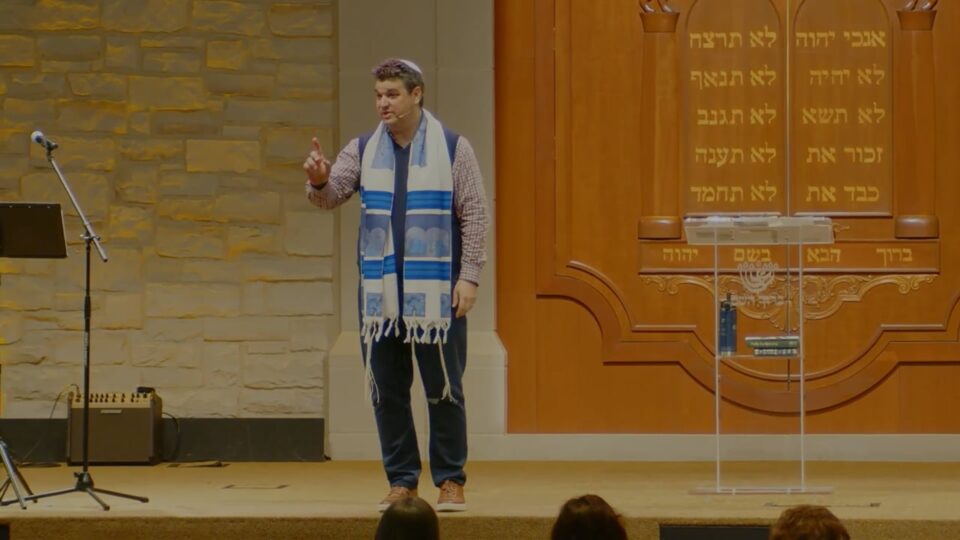
Rabbi Ari Waldman•Luke 24:1-12•August 12, 2023
Timestamps seek whichever format is playing — video or audio.
0:00 We are drawing near to the end of the Book of Luke. We have one chapter remaining. We've been working through the book of Luke for approximately, I think 17 or 18 months now, maybe 19 months, maybe it's been 19 months. And I don't know about you guys, but I've had a, a, a very enjoyable time, uh, digging deeper into the book of Luke. And, and for those of you who miss our Wednesday night discussions, I enjoy our Wednesday night discussions because that's exactly what they are, is we have a group discussion and we have all of these different,
0:46 uh, thoughts emerge, uh, concerning the text. Some good, some, okay, some that can be left by the wayside side, but that doesn't matter because it's, it's engaging and it's challenging for everyone who's present. So for those of you who aren't present on Wednesday nights, well, you're missing a good time. So we finished Luke 23 this past Wednesday night, and now we're moving into Luke 24. As a reminder, we are continuing to push through the book of Luke. Luke, uh, I, I hold that Luke is the author, or, or I, I've taken now to saying Luke is the scribe. Why do I say that? Because, uh,
1:34 I recognize that the Holy Spirit, the spirit of God is the author of Scripture and, and that Luke is there scribing it down upon his, um, insistence. Luke is writing to Theophilus as we see in chapter one, verses three and four. And he says, therefore, your excellency, uh, again, We've, we've talked about Theophilus. Um, I hold that Theophilus is a particular person, not a general term for everyone. And so that if that's true, then he's writing Theophilus for a particular purpose. Um, though we can all take, uh, application from that. Therefore, Theophilus, since I have carefully investigated all these things from the beginning,
2:22 it seemed good to me that I too should write you an accurate in ordered narrative so that this is where we get the purpose for the purpose of, or so that you might know how well-founded or how for sure are the things about which you have been taught. In other words, it seems like Theophilus is already a follower, or at least he knows about Yeshua and is and is well-informed. Perhaps he's a follower, but it seems like maybe he's come across some testings or trials or something, and now Luke is writing to him so that Theophilus can be encouraged so that he can know for sure about all of the things that he's already been taught. What has Theophilus been taught?
3:09 Theophilus has been taught that Yeshua is the messiah, is the king, the reigning king. But how does that look if the king of, if the kingdom of heaven, the kingdom of God is not here? Why is it that Theophilus has to be encouraged? Because the thing, kingdom of God is not here. Yeah, fully. He looks around and he sees all the bad things that are happening. He sees Rome, he sees all of these other things, and he perhaps he's getting discouraged. Maybe it's not Yeshua. Maybe we just thought it was. But all of the signs that come through Yeshua's ministry throughout the Book of Luke are evidence they bear witness to the coming of the Kingdom of heaven. Why?
3:57 Because those are, those are signs that happen with the kingdom of heaven. The, the, the blind being able to see the, the, uh, wounded, the, the, the ones with withered limbs, having their, their limbs come to full fruition, uh, talking about the outcasts of society, those on the outskirts of society, the tax collectors, the prostitutes, the, uh, the centurions all being accepted into the kingdom and drawing near to Yeshua. But the kingdom coming is not just about the kingdom coming here, but it's about the subjects of the king bringing their lives into alignment with the lifestyle or the way of the king.
4:46 And so this is kind of the macro purpose of the book of Luke. And we've, we've been through Luke 22 and 23 Yeshua's in Jerusalem, celebrating the festival of Matzah known as Passover. Uh, we in 23 last week, we discussed his crucifixion. He's brought to trial. He's subsequently condemned to crucifixion by Pilate Pilate response to him three times. And finally, uh, um, in states, the, the, the Verdict. And then we finished off Luke 23 this past Wednesday night, and now we're moving here and we're starting in Luke 24. So you're welcome to open the scriptures with me, however you do that,
5:33 whether digitally or book, Lee, what's, what's the non-digital version? Hard, hard copy. I don't know. Sure. Your Bible. Now, on the first day of the week at Daybreak, the women came to the tomb carrying the spices that they had prepared. They found the stone had been rolled away from the tomb, but when they entered, they did not find the body of the Lord Yeshua. And when they were perplexed by about this, suddenly two men in dazzling clothes stood beside them. The women were terrified and bowed their faces to the ground. But the men said to them, why do you search for the living among the dead?
6:20 He is not here, but he has risen. Remember what he told you when he was still in the Galilee saying that the son of man must be delivered into the hands of sinful men and be executed, and on the third day rise up. And they were reminded of his words. And when they returned from the tomb, they told all these things to the 11 and to everyone else. Now, it was Miriam from Magdala, Johanna, the Miriam, uh, Johanna is, is the second person. And, uh, the Miriam of Yoko or Jacob and others together with them who were telling these things to the emissaries. But these words appeared to them as nonsense, and they would not believe them. But Peter got up and ran to the tomb, leaning in.
7:09 He sees only the linen cloths, and he went away to his home marveling at what had happened. Just a, a reminder, I, I know I already did my recap, but let me, let me just remind us why the women are returning to the tomb. The women are returning because when Joseph, one of the Sanhedrin takes Yeshua off of the off of the cross and puts him into the tomb, the women begin to wrap him and prepare the body. But because it's the prepar preparation day for the Shabbat, they stop. And so they return home.
7:55 And now Shabbat has ended and they're returning to finish the job that they started. So when is it? It is Sunday morning. It says it's the first day of the week at Daybreak. It's very early on Sunday morning. It's interesting 'cause this is right around the time of day, three days prior that Peter denied knowing Yeshua for the third time. Now, before we get further into this text, everyone should be asking questions now, because
8:43 I don't know about you guys, but the math I grew up with, one plus one does not equal three. I I recognize that they're changing math now, and math begins to do different things that it never did when I was young, but wow, I sound old. Anyways, everybody should be asking the question, how is it that Yeshua celebrated Passover over he had a Seder. That's what the text says. That's what Luke says. But we also know from John, the Yeshua was offered up
9:29 As the, as the Passover lamb of God at the appropriate hour at three in the afternoon when all the rest of the Pesach sacrifices were being offered. If the sacrifice is being offered, you can't have already eaten the dinner the night before. It doesn't work like that. So you should ask questions about this, and all of a sudden I'm looking out and I see a bunch of dazed looks. That's good because now you're gonna go back and go, wait a second. Does it really say that? And it does. But go back and look. But let me, I'm not giving you the answer, by the way.
10:18 Very rarely do I give you the answer, because it's not about the destination, it's about the journey to get there and, and the character that's produced. But there are some potential possibilities that we're gonna take a look at just for a minute, because I don't want to confuse everyone too much. But I do want to confuse you a little bit. First of all, there's different sects of Judaism during this time, much like today. Uh, I mean, they weren't the same as today, but there's all these different branches, if you will, of Judaism during this,
11:07 uh, second Temple time period. And I don't know about you guys is, But if you've ever engaged in a conversation with me, you understand that where there's at least one Jewish person, there's probably two opinions. I know the saying is where there's two, there's three opinions, but in my case, it's where there's one, there's at least two opinions. So can you imagine different branches of Judaism at this time, wrestling with the same struggles and not agreeing upon particular dates? It seems probable to me we can't agree on anything even today. Hey,
11:54 well, we can agree that there are some people who hate us. I think we can agree on that. But there's different branches of Judaism and they're arguing as to when the exact time to offer the, the, the offering, the Pesach offering when that time is. Some of the opinions come from the lack of clarity in the phrase that we see. I think it's in Exodus 12, where it says the, the the offering is to be made between the two evenings. Well, between the two evenings. What are the two evenings? What does the phrase mean? Which in which evenings is it talking about? Could it indicate that the lamb is to be eaten on the night of the 13th when
12:43 the, and on the night when the 13th becomes the 14th? Why? Wait a second. Why is this confusing? Because Jews, we start the day at night. And so depending upon when you eat dinner, when I eat dinner today, it will still be, uh, what, what is the date today? I don't even know the date. The 12th, when I eat dinner tonight, it'll be the 12th. Why? Because my family, we eat dinner early. But some of you who eat dinner late after the sun goes to bed, technically on, on the Jewish calendar, it will be the next day. So you and I, we ate dinner on the, on a different day, but the same day, right? Are you confused enough yet?
13:28 Great. We're gonna keep going a little bit more. The rabbis believe, according to the j p Ss commentary that the offering should be offered around 3:00 PM They define the evening between the two evenings as once the sun has, has passed its peak and is beginning now to set that, that's the first evening. And that when it finally sets, that's the second evening. So the, that's when the sacrifice has to be offered. But there's another complicating issue. Uh, right around this time period, not too long before the time of Yeshua, there was a 52 week calendar in place that was subsequently replaced by a purely lunar calendar.
14:19 Now let me just, you're gonna be like, what did you just talk about on the lunar calendar that we have today? It's 54 weeks. 52 is how many weeks? Less than 54. It's two weeks less. So you can think about this, if the calendar was 52 weeks and it repeated every year, eventually Passover was gonna be in the fall, and there's some complaints that it has deviated too far from its proper season. So they switched to a lunar, a purely lunar calendar. And this is what breeds issues between the Kuron community and the second temple Judaism, the Kuron community.
15:04 The Essenes had been on the 52 week calendar, and now they're not on the following the new calendar. So there's a difference. And so if there's a difference in number of weeks, there's obviously a difference in the day of Passover. Okay? So that's one difference. Another complicating issue, another complicating issue is if Passover falls on Shabbat, then it becomes an undue burden on some people to do work. And so there's some, um, adjustments of the calendar that are made preventing Peoc from ever falling
15:50 on a Shabbat. Now, those who had been in exile in Babylon up until this point, so it's been 500 years, they've, for 500 years, they've been away from the temple after 500 years, they developed a pretty good system by which to always have Passover on the same day and to avoid Passover falling on a Shabbat. Except the problem is in a true lunar base calendar, it's not the calendar which dictates it, it's the mo the moon, the appearance of the moon, which dictates when the day. Is anybody confused yet? Anybody like triple confused? 'cause I'm still going
16:35 on the true lunar calendar. It's the new, the appearance of the new moon, which dictates the beginning of the month. And the beginning of the month dictates what day is the 14th or 15th of the month, right? But that's all dependent upon the sighting of the new moon, which requires a couple eyewitnesses. Now, what if they disagree? Then they wait another day and then they cite the new moon. Well, a day just happened. What day do we call that one? Well, that one, that one doesn't count because it, it was yesterday. It still counts, but we don't know what it is. Where does it fall? Like what it's if if, if it doesn't have a number, what's the number?
17:20 Because it affects everything else. If that's not enough possibilities to, to give you confusion. Let me give you another one, that there could have been a practice among the Galileans at the time of offering the pass offering earlier than the Judeans. Could it have been a calendar disagreement? We don't know. Could it have been them trying to avoid, just think about this, the quarter million to million people who are coming to offer the pass
18:09 offering at the same time, on the same day in the same place. I just want you guys to think about that. Anybody ever go shopping on Black Friday? That times a million. You know when the doors open and people get trampled because of consumerism? This is the opposite of that. People get trampled because you're trying to rush and take their sacrifice because it's gotta be at the right time on the right day. You see the complications here as to determining the day. So it could be, I'm not gonna solve the problem for you, by the way, I'm just introducing new problems for you to think about.
18:55 It could be that Yeshua offered that Yeshua celebrated the Seder with his talal adeem In their own manner, but that manner was different than other people's manners. And that would be why Yeshua could then be offered as the sacrifice at 3:00 PM on payoff, regardless of all of that Seder confusion, all of you're probably like, okay, that's enough. Regardless of that, you know what we do know for a fact that it's Sunday morning at the break of dawn, and the women come to the tomb. They're coming to the tomb.
19:43 They're prepared to deal with the dead body of Yeshua, but they're not prepared for the news of his resurrection. They hadn't finished the job, as I mentioned, when, when Joseph took Yeshua off of the cross. I do just, lemme just, lemme just say one thing I found very interesting on Wednesday night. We're talking about Joseph taking Yeshua off of the cross. He ended up being covered in blood. You can't take somebody who's been crucified off a cross and not not get affected by it. It's, it's fascinating to me because I've mentioned before that Luke o Luke open story, um, arcs and then he'll close them chapters later.
20:32 And Luke two, what we see is a priest who I would presume to be on the Sanhedrin, Who lifts up Yeshua as a baby, and he's with other women. And now here we are 22 chapters later, and it's another council member lifting up Yeshua at his death with other women. It's just, there's something, there's something nice in the story arc about that
21:18 these women are preparing Yeshua's body. They, they realize that Shabbat is quickly approaching and so they go home. What does that tell me? That Yeshua's family, these women who were followers of Yeshua were what we would call Torah observant. They didn't work on Shabbat. So they go home, they sit out Shabbat, and, and let me just take a side minute here and say, if you're, if you're weirded out by the caring for the dead, like that's a pretty common practice both in ancient times and also in modern times. It's just, you probably don't have to deal with it. Uh, usually go to a funeral home or, or something like that. But it's customary to exercise great care for the body of a dead person.
22:06 It's been continued in modern Judaism. When you, when you bury the casket, uh, during the graveside funeral to put the dirt on top of the casket, this is one of the, um, mitzvah. It's a mitzvah that can never be repaid. It's in fact, it's, I'm pretty sure it's the only one that can never be repaid. Why? Because I can do something good for any one of you, and at some point you could pay me back and do something good for me. But when I'm covering the body of the dead, it's something that can never be repaid by that person. And it, and it's considered to be a great mitzvah. These women, they're coming back, they're ready to care for the,
22:54 the dead body of Yeshua. It's very early in the morning. So early, maybe the sun isn't quite up, it's maybe dark in certain places. And they come to the tomb and they find the stone rolled away and they enter and they discover the body of Yeshua is gone. And they, they begin to think, where's his body? Who could have taken his body? I, I just, again, let me stop for a moment. Can you imagine going to a graveyard at the break of dawn when it's still dark and there's shadows everywhere and the tomb that you're expecting to be closed is open and there's no body there.
23:41 I know like Hollywood directors who would have fun with this by creating a movie out of it. Just imagine the, like, the trepidation that is that is within them. All of a sudden they're in a graveyard, they're at a tomb, and there's nobody, and they're thinking, what was it a was it somebody who goes and steals dead bodies? Like that's a, that's a weird person. I don't know that I want to meet that person. So they're there a little bit paralyzed. And, and it says in verse four, and while they were perplexed about this, I think perplexed is a very nice term for what they probably were while they were perplexed by this. Suddenly two men in dazzling clothes stood up beside them.
24:28 The women were terrified, bowed their faces to the ground. But the men said to them, why do you search for the living among the dead? He is not here, but he has risen. Remember what he told you when he was still in the Galilee saying that the son of man must be delivered into the hands of sinful men and be executed and on the third day rise up? They're perplexed by their circumstances. I I, I'm just gonna tell you, perplexed is not the word that I would use in my case. I don't know about you guys, terrified. I can get on board with the women. Were terrified, perplexed, maybe they're beginning to be like uhoh. What's going on here?
25:14 They're unsure of how to proceed. You can just imagine if this were you today, how would you behave? And suddenly there's two men in dazzling clothes who stand beside them. I don't mean dazzling, like, like full of glitter or, or shiny. That's not what the, it is not what it's indicating. It's the connotation of this is these two men burst upon or stepped forward suddenly. So I don't know about you, but I I like to prepare my children for real life. And so when they're walking through the halls of my house, I hide and then I jump out and scare them. Why?
26:04 Well, I say it's because I want them to be prepared for when it happens in real life and that they can actually knock the person out. It also is somewhat therapeutic. But you can just imagine if somebody jumped out at you on a dark morning in a tomb, what would you do? You would be terrified and you would fall in your face probably trying to run outta the tomb. You'd trip and fall in your face. I don't know. This is, this is very nice. It says they bowed their faces to the ground. I don't know, maybe they were trying to run out of the tomb and they, they're,
26:49 they just tripped and ate it. But then they realized that they're these angels. I mean, these men are dressed as angels. Like it's this kind of, uh, other worldly, if you will, um, brightness. The only other time this word is used in the transfiguration is in the transfiguration account. And it, and it carries the same root as the word lightning. So they're dressed. I think about this, they're dressed as lightning. I mean, I, I know I'm kind of making it a little bit of a stretch there, but they're dressed as lightning, but they burst forth at the same moment. And you're like, Ah, Sorry if I scared you. But you can just imagine what these women are feeling.
27:35 They're terrified, they're perplexed. The angels burst onto the scene clothed in something related to lightning. And then they say, why do you search for the living among the dead? I'm telling you, if it was me, I'm like, I'm still getting my my heartbeat back here. Can you just don't ask me questions yet? But from an earthly standpoint, what they're doing is natural. They left the body of Yeshua here a couple days prior, and now they're coming back to finish the job. They're trying to honor him when they see the empty tomb. It's natural to assume the worst that someone came and stole his body. And it would frighten me to be in a tomb also at daybreak, when two men show up wearing lightning.
28:24 But the men continue, he's not here. He has risen. Remember what he told you while he was still in the Galilee? The son of man must be delivered into the hands of sinful men executed. And then on the third day rise, do you ever have those moments when you ask a question and you expect a particular answer, The person gives you a different answer, but what you hear was the answer that you were expecting to hear. Have you ever had those moments? You see, Yeshua has prepared them multiple times. I think I counted it's at least four times where he said,
29:12 we're gonna go to Jerusalem. I'm gonna be tried, I'm gonna be killed, and I'll come back three days later. But what's their expectation of the Messiah? Their expectation is that he is gonna be the king ruler deliverer. So when he's saying these, they don't have, uh, if you will, a hook on the wall to hang this piece of information. So it just goes right through them. They've heard it four times. It still hasn't registered. Why? Because they don't, they're not what expecting it. And so when it's, it goes contrary to their expectations, it's, it doesn't file the same way in our brains until someone comes back later and
29:58 says, by the way, do you remember when? And then all of a sudden you go, oh, that's what he was talking about. These, these angels go, do you remember when? And the, and they're, what he said he was going to be delivered into the hands of fulman executed. And then on the third day rise up and all of a sudden it is beginning to click. You can just imagine we didn't know what it was up until this point, but now we get it. So they get excited and they run back to go to the almadi. But I just wanna make a point before, before we get to the next next section of scripture,
30:46 these angels serve at least in the Luan account as a pair of witnesses declaring the surety of what has happened. What do I mean? Hold on a second. What do I mean? In Deuteronomy 17, six, it says, by the word of two or three witnesses, the one who is to die is to be put to death. No one is to be put to death by the word of one witness or Deuteronomy 1915. A single witness shall not rise up against a person for any offense or sin that he commits by the word of two or three witnesses is a case to be established. The angels serve as the case upon which
31:36 the case of the resurrection is established right here in Luke's account. There aren't even two witnesses that bear witness against Yeshua for his trial. There. There are more than two witnesses that that witness his execution. And even the heavens and the earth bear witness to Yeshua's place among them at his death. You see the heavens, the son, Luke says, the son died, and I think it's in the Matthew account. It says that the earth shook and that the the veil was ripped. The heavens and the earth bear witness as to who Yeshua is. But but us, I guess were his intelligent creation failed to see it.
32:28 And so now these women, they go running back and they're reminded of his words and they go, oh yeah, I remember that. So in verse eight, and they were reminded of his words. And then when they returned from the tomb, they told all these things to the 11 and to everyone else. Now, it was Miriam from Magdala, uh, or you may know her as Miriam, uh, Magdalene, uh, yo uh, Johanna or Joanna, the Miriam of Jacob and others together with them who were telling these things to the emissaries. But these words appeared to them as nonsense, and they would not believe them. And Peter got up and ran to the tomb, leaning in. He sees only the linen gloss, and he went away to his home marveling at what had happened.
33:17 Again, it took someone else reminding them of what Yeshua had said for it to actually finally click. And then once it clicks with them, it's just like all of us, once something clicks, we run and we want to tell somebody else, and we're like, Hey, did you know this? And they go, that's nonsense. Have you ever had ever had anything happen in your life where you like run to the other person and you're like, oh my gosh, did you, do you want to know what I just saw? And you tell 'em, and they're like, that, that's not possible. Or there's no way you saw that, that's this is exactly what's happening to these women. They run to the 11 and, and, and,
34:03 and their words appear as nonsense. It's really an interesting thing. But the other thing that you should be asking while you're reading this is how come they don't have to go in multiple directions to find the 11? They all run to the same place and all the 11. And it says, and others were gathered. We started in on this conversation on Wednesday night. I actually wonder if, you know, they, at least into the Luan account, Yeshua was tried, um, as wanting to be king of the Jews, or in other words, a rebel leader.
34:49 And when you crucify a rebel leader, I mean, in modern day, we would say if you cut off the head of the snake, there's gonna be six other snakes that appear. You can't just cut off the head. You have to go with the, the secondary tier of leaders. Also, it makes sense why they're hiding in my mind, they've all retreated and they're like, what if that's gonna be like, what if they're coming after us? Now? So these women, by the way, women were not necessarily much of a threat, uh, to Roman rule. And I even, I gave a reason for John because John places himself there on, uh, at least at the crucifixion in his book.
35:37 But anyways, so these women come, they find, they find the 11 and and the others, and it, and we're actually listed, we're told who at least three of them are. One of them is Miriam from Magdala, Johanna. Uh, it doesn't qualify who she is here, and then Miriam of Jacob. So I want to also say Luke tells you who these three are earlier. They're with Yeshua starting in Luke chapter eight, Miriam from Magdala, she had seven demons that came out of her. Luke chapter eight, uh, verses one through three. Johanna, she was the wife of Kza, Herod's household manager. So she was a really important person and wealthy. She had been healed by Yeshua,
36:24 either of evil spirits or infirmities. It doesn't say, it just says for both in regards to these three. And then Miriam of Jacob, Matthew describes her as the other Miriam. Mark also says the Miriam of Jacob. My question is, could this be Miriam, the mother of Yeshua? Why wouldn't it say the mother of Yeshua? Because Yeshua's next oldest brother is Jacob. Or what we always know as James, to me, this could be an indicator by the writer that something has changed. Something has shifted that up until this point, she was the mother of Yeshua and she was always there.
37:09 But now Yeshua is in a greater state, and now she's the mother of Jacob. I don't know. It's a, it's an interesting thought to me. Peter gets up again. I know I've done this multiple times. Peter is the one when you tell him something, he jumps as far and as high as possible when he's, when Yeshua says, get out of the boat, he says, splish splash. I was taking a bath. No, he doesn't. No. He jumps out and he was like, begins to like run to Yeshua on the water. And then all of a sudden he's like, whoa, wait. Eight. And he like starts to sink. Peter jumps out in the be in, in, in, uh, in chapter 22,
37:58 cuts the servant's ear off in defense of Yeshua. And Yeshua says, no, not right now. And he heals the servant's. Peter, man, that dude is like on fire to be the first, but in this case, he runs. He's like, wait a second. I just want you to think about this. Exactly. Three days prior, Yeshua looked at him as the crow crow, as the rooster crowed the third time and caught his eye. That's what Luke says. And Peter was overcome with shame. And three days later, Peter is here and he says,
38:47 this is what he was talking about. He jumps and runs to the tomb, and he gets inside and he sees only linen cloths, and he starts heading home, marveling at what happened. You can imagine, or maybe you can't, what's going through Peter at this moment? Peter got caught in his weakest moment, and now all of a sudden he realizes everything that Yeshua said was true. I don't know, maybe he realized it when the crow, when the, when the rooster crowed the third time and he's just been waiting. But now he really recognizes it when he goes in and
39:33 Yeshua's not there. So what does this mean for us? I have three questions that I want to begin to tie up this message with. This is my beginning of my ending. I'm, I'm qualifying at this time. My first question is, what are your expectations concerning our Lord Yeshua? And only you know that, well, you and God also knows, but secondly, why do you search for the living among the dead? By the way, that's what I titled this message, because that line sticks out to me from all of the other
40:19 lines. And third, thirdly, not, not thirdly, but thirdly, what makes you marvel. So I want to take a minute and talk about this. Why do you search for the living among the dead? What were your expectations of the Messiah? If you, if you have come to know Yeshua, what were your expectations of him and has he done that in your life? If you don't know Yeshua, what are your expectations of the coming Messiah? And why haven't you considered Yeshua? What are those expectations? My other question is
41:04 if your expectations were different than what they should be, or maybe I should change the word and call your dreams. What were your dreams? How do you handle these deferred dreams and unmet expectations? I watched a video yesterday from Pastor Robert Morris, and if you want the video, it's in the YouVersion app. I I put a link in there for you. I watch Pastor Robert and he, he explained, um, he, it's, it's a, i i remember seeing the whole message, but this, this section is focused on dreams and what do we do with them?
41:55 And he's coming from the perspective of Joseph from the book of Genesis. Joseph has a dream, actually. He has a couple dreams. Well, he is, ends up with several dreams. But anyways, he has a, he has a dream in the beginning and it gets him in hot water. And what Pastor Robert says this is, is very fascinating. Pastor Robert says, the dreams that God give you, he gives you for the purpose of launching you out so that it puts you into places of testing and trial where your character can be built. It's a fascinating way to think about it because Joseph,
42:43 I just want you to think for a moment. We're, we're gonna get to the Joseph's story in, in like three months or two months, but Joseph is a 17 year old. I don't know if you would call him boy or man, but that, that, like, he's like right on the cusp. He's like, yeah, I'm, I'm, I'm the thing I anybody knows. 17 year old boy, man, I, I, it's, they're just old enough to really actually know, but also they're young enough that they don't really know. And God gives Joseph this, this dream where his brothers,
43:30 mind you, his brothers who have been bullying him his entire life, where his brothers bow down to him and worship or bow down in servitude to him. And what does Joseph do with that dream? He goes and tells his brothers, I just want you to think about that for a minute. Pastor Robert says he, in his opinion, it's it's the only test that Joseph fails, um, along the way because, but the problem is, or, or maybe the bonus is that's where his character begins to get formed. You see, our character is not necessarily formed when we are sitting on the
44:17 couch and eating potato chips. Our character is formed when we are caught in discomfort and suffering and made to persevere. And that it's out of that, out of the difficult times where the character begins to be refined. And if the character doesn't get refined, you don't make it through. And, and, and that's it. Pastor Robert goes on to say that character is the foundation of our destiny. Our dreams aren't our destiny. The dreams get us to the point,
45:03 to the situations where our character is built and the situations where our character is built produces destiny. It was a fascinating con uh, conversation. And then he says this, and I totally agree with this, not that I haven't agreed with anything he says yet, but he says, you will never have a larger destiny than your character can support. So you think about that if you have a difficulty, if you have, if your character isn't fully formed, your destiny is limited. But also if your character isn't fully formed, do you know what he's gonna keep doing? Putting you two into that same situation over and over
45:50 and over again? Why? Because your character has to become fully formed and all of a sudden everybody in here goes, oh, that explains the last three years. Why? Because we're put into situations and when, when we, we, we get outta the situation, we're like, oh, yeah, Lord, we passed. But then the situation comes back around and you're like, God, I did this one already. I remember I passed this one. Don't you remember? And you're like, okay, well, whatever. And you come through that one, you're like, okay, I passed. I'm angry at that person, but I I still passed.
46:38 And then the situation comes again and you're like, God again. Really Another time. Why? Because you haven't passed yet. Because your character is still being formed in that, in that particular moment. And, and I know I'm saying you, but this is all of us by the way, the, like all of us go through what, what I would call character forming moments. If you read Calvin and Hobbes growing up, one of those is shoveling snow out of the driveway. I did my character building moment this morning. I went and shoveled the snow outta my driveway. Y'all can laugh. It's 112 degrees or something outside.
47:28 But the question that this leads us to is, are you willing to let God show you what he wants to do with your life? And if you are, can we let go of our own expectations as to what that is? These women are going back to the tomb. What are their expectations? That Yeshua is dead and still in, in his bodies in need of preparation or, or finalizing the preparation. They go back with this expectation. You know what, he's already moved on. How often do we go back with our own expectations and not his?
48:15 It's been three days depending upon how you count. It's been three days since Yeshua died. Abraham also walked with Isaac three days and lifted up his eyes and that whole time considered or expected that his son would be resurrected from the dead. So how do we search for the living among the dead today? Well, lemme just start with this. You can, you can answer that question in your own life. Lemme just start with this. Our living Lord leaves a certain size hole in our lives
49:01 and we attempt to fill that hole with lots of different things. Perhaps Netflix, perhaps potato chips, perhaps brisket. 'cause now I'm getting hungry. Perhaps you go and get married 'cause you expect your wife is gonna fulfill all of your dreams and desires. Yeah, whoever said that was wrong, I a hundred percent agree with you. That is not the purpose of a spouse. The purpose of the spouse is never to fulfill your dreams and desires. They're to come along and you're to help one another serving the Lord.
49:48 That's the purpose of a spouse. Maybe you place all of your dreams and your hopes and your expectations and your children wrong entertainment, sports, politics, activism, whatever it is that you're seeking to fill that hole with, I guarantee there's still part that's open. My question to you is why are you looking for the living Lord among the dead? Because those won't fill that hole. You have to look to Yeshua, our risen Lord to fill that hole. And after that, I'm not saying everything becomes easy,
50:36 but when you begin to do things in the right order, the left, the rest of your life begins to fall in order. So be careful what you're looking to fill that hole, the living hole. Because most of what we fill, those desires, those dreams in our lives, most of what we do is dead. Or with those who are about to die. And I'm not trying to be fatalistic here, but I don't know if you know this, but you and I will die someday, sometime. That's just the way it is.
51:24 If we can recognize that and we can turn and look for the living today, look for Yeshua. Look for the living. The living risen Lord, it will change the rest of our lives. Amen. So that's, that's my challenge to you today, Ave. May our Father in heaven. Lord, I thank you for this. Lord, I thank you for the book of Luke and Luke's writings concerning the life of Yeshua. Lord, I pray that you would begin to draw us near to you,
52:12 Lord, that you would open up our eyes, Lord, that we would look to the risen Yeshua and not that we would look to fill that need in our lives among the dead. Lord, I pray that you would draw each and every one of us to you today on this Shabbat. We bless you and praise you in the name of Yeshua, our Messiah. Amen. May the Lord bless you and keep you.
52:57 May the Lord make his face shine upon you and be gracious to you. May the Lord lift up his countenance upon you and give you peace.
53:52 In the name of our Messiah, Yeshua Shalom.