
Message
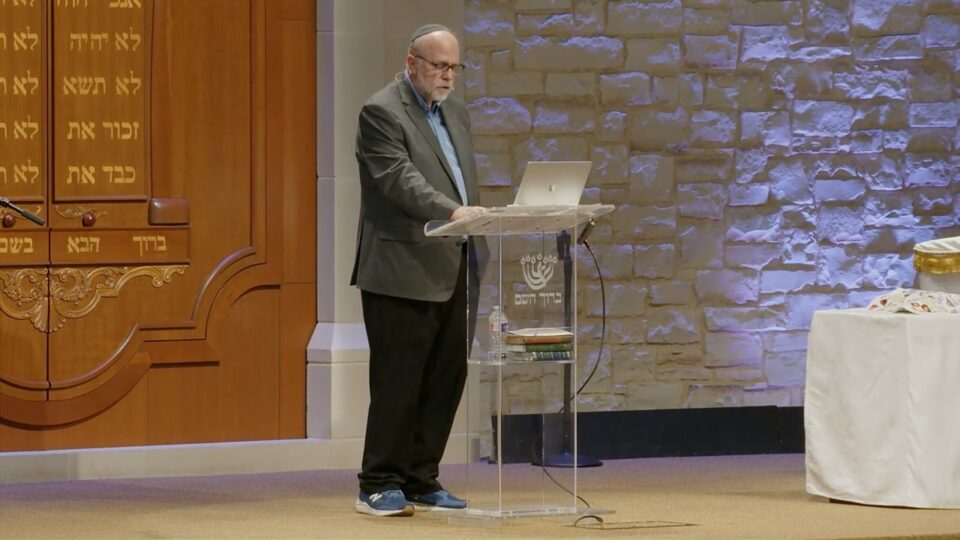
Elder Barry Bruff•Acts 28:1-16•June 27, 2026
Timestamps seek whichever format is playing — video or audio.
0:01 At this time, it is my privilege to invite Elder Barry Brough to the stage. He is continuing with us in the Book of Acts and will be bringing a word that he has studied diligently, and I will pray for him at this time. Father, we just thank you for your goodness and your mercy. We thank you for your faithfulness to Barry. We pray that as he opens up his mouth this morning, that he proclaims your word in such a powerful way that it cannot be refuted.
0:50 Father, we pray that everyone listening would receive and be enriched by the going forth of your word. Father, take all that he has studied and prayed about and bring it for us as true listeners who are willing to listen and obey. In the mighty name of Yeshua, we pray. Amen. Thank you, Lord. Here we go. Shabbat Shalom, everybody. Shabbat Shalom. So today's passage has been of interest to me for some time. As we will read, we will see that Paul receives a snake bite and suffers no ill effects. I like that. It's encouraging to me. I like accounts of the Lord rescuing His people.
1:35 As our many months in the study of Acts has gone by, I found myself desiring to be able to share this passage. However, as time drew closer, I didn't ask Rabbi Ari as I wasn't really feeling very rescued, and the desire to speak these verses kind of faded away. Sorry. However, about a month ago, Ari asked me if I would be willing to share on today's date. And I asked him, "Well, does that coincide with the first verses in Acts 28?" He said he didn't think so, but he would check. So Rabbi Ari changed his plans a bit and adjusted the sizes of
2:23 the preceding passages so that the beginning of Acts 28 would line up on this day. Now that I had this passage, the question was: How should I proceed? Part of me wasn't sure I even wanted this anymore. Because of various circumstances and seeing what goes on in other lives, this message is different than I would originally thought. I'll get it together in a minute. We will go through verses one through 16 in Acts chapter 28. I'll provide some commentary, and we can draw application to our lives. We will also veer off a bit, discuss tribulations, and what we should do when we find ourselves in one. We're going to see how the Lord rescues His people, sometimes
3:10 instantly, sometimes over a bit of time, and sometimes we don't get what we desire. What do we do if we experience loss in this life? I believe the Lord's desire is to rescue us and help us recover if we have experienced a loss. I think He desires to show Himself strong, performing miracles like healings and coordinating circumstances more times than we may see. I think we limit Him sometimes because we might not believe He works in this way. Malta is a picture of the Lord's recovery and restoration. We will see instantaneous deliverance, healing, encouragement, renewal, and recovery over time to be ready for an upcoming voyage. This might be helpful in our lives in whatever voyage the
3:58 Lord has planned for us. So come with me to Malta. Okay, a time of rescue, healing, encouragement, and renewal in a new voyage. So Acts 28, one through 16. "After we were brought safely through, we then learned that the island was called Malta. The native people showed us unusual kindness, for they kindled a fire and welcomed us because it had begun to rain and was cold. When Paul had gathered a bundle of sticks and put them on a fire, a viper came out because of the heat and fastened on his hand. When the native people saw the creature hanging from his hand, they said to one another, 'No doubt this man is a murderer. Though he has escaped from the sea, justice has not allowed him to live.'
4:43 He, however, shook off the creature into the fire and suffered no harm. They were waiting for him to swell up or suddenly fall down dead. But when they had waited a long time and saw no misfortune come to him, they changed their minds and said that he was a god. Now in the neighborhood of that place were lands belonging to the chief man of the island, Publius, who received us and entertained us hospitably for three days. It happened that the father of Publius lay sick with fever and dysentery. Paul visited him and prayed, and putting his hands on him, he healed him. And when this had taken place, the rest of the people on the island who had diseases also came and were cured. They also honored us greatly, and when we were about to sail, they put on
5:29 board whatever we needed. After three months, we set sail in a ship that had wintered in the island, a ship of Alexandria with the twin gods as figurehead. Putting in at Syracuse, we stayed there for three days, and from there we made a circuit to Rhegium, and after one day, south wind sprang up, and on the second day we came to Puteoli. There we found brothers and were invited to stay with them for seven days, and so we came to Rome. And the brothers there, when they had heard about us, came as far as the Forum of Appius and Three Taverns to meet us. "On seeing them, Paul thanked God, took courage, and when we came to Rome, Paul was allowed to stay by himself with the soldier that guarded him."
6:18 So I want to contrast Acts 27 and what Rabbi Sean and Rabbi Ari shared. I summarize it as a time of making it through stress, anxiety, fear of the loss of their lives, loss of cargo, loss of their ship, just hanging on, making it by faith alone. Contrast that with Acts 28, title that recovery, kindness experience, deliverance experience, hospitality experience, healing, provision, fellowship, and then a new voyage. So Malta, "After we were brought safely through, we learned that the
7:03 island was called Malta." So Malta is about 60 miles south from Sicily and about 400 miles from Rome. You can see the island there and the traditional shipwreck site, which is called St. Paul's Bay. The Malta in AD 60 and 218 BC, Malta came under Roman political control, forming part of a praetorship with Sicily, a province of the Roman Empire, a maritime hub, agrarian community supplemented by its role as a maritime way station, and the island was governed by a Roman official titled the Proton or chief man.
7:50 Malta today, population under 600,000, about 122 square miles, 10th smallest country by area, ninth most densely populated. Contrast that to Arlington, about 400,000 people in about 100 square miles. So the prominent religion in Malta is Catholicism. However, I believe it's written into their constitution that that's the state religion, but there is total freedom of religion in Malta. So let me ask you a question. Was St. Paul's Bay the actual site of the shipwreck? Could it have happened on a different bay in Malta?
8:38 Rabbi Ari mentioned a book several weeks ago called "The Lost Shipwreck of Paul." So I said, "Wow, that lines up with what I'm going to be speaking about or in that area." So I like audiobooks. I got it on Audible, listened to it. It's a very good book. In that book, the author has done a lot of research, paid absolute specific, looking at the text to understand what the text said about the beach and about the area between the seas and so forth, and he didn't feel like it lined up with St. John's Bay. And there were a couple other bays, but what it looks like, and you could get the book for yourself and make your own
9:23 decision, is that it's likely that St. Thomas Bay in the southern part of the island is the actual shipwreck site. So I'm not going to spoil the book for you, but it's a very good book. You might find it enjoyable. All right. "The native people showed us unusual kindness, for they kindled a fire, welcomed us all because it began to rain and was cold." So welcome and kindness expressed by people that they didn't even know. Remember, they came from being beaten up. They were scared. They were afraid that they'd lose their lives. So the native people could have actually been predatory. They didn't know what they were going to expect. God's kindness expressed through people. Can you think of a time, maybe a time when you were hurting, when you felt
10:10 God's kindness expressed through the actions of someone? Is there someone with whom you can express God's kindness that might be going through a hard time? Will tribulation take hold again? "When Paul had gathered a bundle of sticks and put them on a fire, a viper came out because of the heat and fastened on his hand." So it looks like the viper really caught hold of his hand from the text. Paul was just going about the business of the day, engaging in ordinary work. Paul wasn't above ordinary work. Paul was bitten by a snake. Typical symptoms could have been a severe immediate pain at the site, rapid swelling, nausea, vomiting, difficulty breathing, and shock.
10:57 But what happened? So what do the native folks think? No doubt this man is a murderer. "When the native people saw the creature hanging from his hand, they said to one another, 'No doubt this man is a murderer. Though he escaped the sea, justice has not allowed him to live.'" I think they believed in the Greek goddess Dike, I think is probably the wrong pronunciation. I think her job was to find people that weren't behaving justly, report them to somebody else, and then retribution would be taken on them. However, we don't believe in those gods. So the native people equated Paul's misfortune with divine justice or judgment. They made the assumption that Paul must be evil because this terrible, bad thing happened to him.
11:44 Do we ever think that when something bad happens to others, that they are experiencing God's judgment or perhaps getting what they deserve? They might be. There could be, but they don't have to be. Do we ever think when something bad happens to us that we might be experiencing God's judgment? This morning we were attacked by fire ants in our kitchen. So I was like, "Man, Lord, am I preaching on the right thing? Am I doing the right stuff?" Anyway. So Paul shook it off and suffered no harm. "He, however, shook off the creature into the fire and suffered no harm." So why did the snake bite not harm Paul?
12:30 We know God had a purpose in Paul going to Rome from Acts 23 and 27. Nothing was going to stop that purpose. Was it what Yeshua said in Mark 16:17 and 18 about picking up snakes and suffering no harm? Did Paul pray at that moment? Did Paul rebuke the snake bite? Was it to be a witness for God to the island's people? Perhaps all the above. From an evil man to a god. "They were waiting for him to swell up or suddenly fall down dead. But when they had waited a long time and saw no misfortune come to him, they changed their minds and said, 'He must be a god.'" Okay? Because people that get bit by the snake
13:16 usually swell up and fall over dead. They figure, "This guy's got to be a god." Small G, though. So they expected him to swell up and fall down dead. When it didn't happen, they assumed him to be a god. This opened the door for Paul to witness to them. So tribulation in this life. "Do you now believe? Behold, the hour is coming, indeed it has come, when you will be scattered, each to his own home, and will leave me alone. Yet I am not alone, for the Father is with me. I have said these things to you, that in me you may have peace. In the world you will have tribulation. But take heart; I have overcome the world." I don't really like the part of that verse that's in red. Probably none of us like tribulation, right?
14:06 Putting this in a kind of a different way of looking at it, I think this world provides opportunities for tribulation, right? Whether we do something we shouldn't have, whether we step into something at the wrong time, whatever it is, there's opportunities for tribulation. That's what I believe Yeshua is saying. In Yeshua, we can have peace, and take heart, Yeshua has overcome the world. So answers to prayer in times of tribulation, or how does the Lord rescue his people in times of tribulation? We have a praying congregation. A lot of people, like before the service, people are praying for the service. After the service, there's folks that'll pray for you for whatever's going on.
14:53 So we believe in prayer. We believe the Lord answers prayer. Let's look at things that can happen, possible outcomes. Well, probably me looking at it like an engineer, the problem gets resolved quickly, like with Paul. Before it even took root, the snake had no effect on him. The problem gets resolved over time. A little more painful maybe, but it gets fixed. The problem doesn't seem to get resolved or some kind of loss occurs. So, I don't know about you, but immediate rescue, release is my vote. If you're praying for me, pray for immediate stopping of whatever's going on that's not good. That's the most desirable for me.
15:38 Now, rescue, release over time is good, but takes perseverance and possibly going through some process, right? Might have to go through, follow some steps, do different things. I mean, that could be from a physical standpoint or just getting out of a financial disaster or whatever it is. Sometimes there is loss in this life. So recovering from loss may take some time. Grief and recovery can be a process. The time on Malta is a time of recovery and renewal. Excuse me. So going to look at some biblical accounts of immediate rescue and release. Daniel in the lions' den.
16:24 They set Daniel up to be a target, to fall into a problem. Tried to remove Daniel from his position. And then the calming of the Sea of Galilee. I think Sean talked about that in his message last week. The disciples found themselves in a terrible storm and needed help. So we know the story or the accounting of Daniel. He was one of the rulers, but he had this custom of praying three times a day, right? Because he knew where his power to do stuff, to get things done came from. It came from the Lord. The other guys didn't like it, right, because he was probably getting lots of favor, and the king saying, "Man, what do you think of Daniel? He's doing really good." Probably got jealous. Whatever.
17:10 Anyway, I'll read a few verses. "All the presidents of the kingdom, the prefects and the satraps, counselors, governors, all are agreed that the king should establish an ordinance and enforce an injunction that whoever makes a petition to any god or man for 30 days, except to you, O king, shall be cast into a den of lions." The King Darius signed the document and agreed. Think about it. Rulers are probably susceptible to getting screwed up advice. So think about it. But look, you're the really cool ruler. Nobody should be asking anybody but you what needs to happen. So he signed the thing. Daniel didn't pay attention. He got down on his knees three times a day and prayed as he had done previously. Then those men who had set a trap came and saw him praying,
17:56 making his plea and petition before God. Now, the king didn't want to do this, "Then the king commanded, and Daniel was brought and cast into the den of lions. The king declared to Daniel, 'May your God, whom you serve continually, deliver you!'" So he found himself stuck setting up a law that he had to go enforce. So reluctantly, he puts Daniel in the lions' den. Then the next day at daybreak, the king arose and went in haste to the den of lions. As he came near to the den where Daniel was, he cried out in a tone of anguish. The king declared to Daniel, "O Daniel, servant of the living God, has your God, whom you serve continually, been able to deliver you from the lions?" Then Daniel said to the king, "O king, live forever. My God sent his angel and shut the lions' mouths, and they have not harmed me,
18:43 because I was found blameless before him. And you also, O king, I have done no harm." So, there we see Daniel with a bunch of hungry lions at bay. Daniel was protected instantly and in a clearly supernatural way. And in the morning, Daniel is looking up at the king, who's speaking to him, the verses that I just mentioned. This proved significant relief to the king, who was tricked into putting Daniel into the lions' den. So here's a case of supernatural deliverance. He had to stay in there all night, but he was instantly protected from the lions. And we know what happened. The guys that accused Daniel were thrown in there, and instantly the lions
19:29 overpowered them. The calming of the Sea of Galilee. On that day when evening had come, he said to them, "Let us go across to the other side," and leaving the crowd, they took with him in the boat, just as he was , and other boats were with him. And a great windstorm arose, and the waves were breaking into the boat, so that the boat was already filling, but he was in the stern, asleep on the cushion, and they woke him and said to him, "Teacher, do you not care that we are perishing?" And he awoke and rebuked the wind and the sea, and said to the sea, "Peace, be still." And the wind ceased, and there was great calm. He said to them, "Why are you so afraid? Have you still no faith?" And they were filled with great fear and said to one another, "Who then is this, that even the wind and the sea
20:15 obey him?" Yeshua commands the winds and the waves. They cease. Instant and supernatural turn of events. Contrast that to the shipwreck, that for many, many days, they're buffeted about and in fear of their lives. Here we see an instant turning. All right, let's talk about rescue release over time. Joseph. He was sold by his brothers and separated from his father. We know the accounting in Genesis. The brothers became jealous of him, and they sold him to the Ishmaelite traders. We're going to talk about David attaining to the position to which he had been anointed. It's interesting, Saul messed up, and he was
21:03 removed from being king, but he still was king, practically. He was still reigning and so forth. David was anointed as king, and then for many, many years, he was not in the position of king. So both of these things took some time. And then we're going to talk about a modern-day missionary, falsely accused and imprisoned. So Joseph, sold by his brothers. He gets sold to Potiphar. He rises in Potiphar's house. He's got claimed that he did something inappropriate with Potiphar's wife. Joseph's put in prison. Then Joseph rises and becomes in charge of the prison. Joseph then gets released from the prison when it's thought that he can interpret Pharaoh's dream. He does interpret Pharaoh's dream.
21:50 He gets made the second highest ruler in Egypt. He's vindicated before his brothers, his brothers who had sold him. He's reunited with his father, Jacob. Now, Jacob was crushed, mourned his son for years and years. And turned out he wasn't even dead. But reunited with his father, Jacob. Jacob then blesses Joseph's sons and declares them to be his own. And then Jacob blesses Joseph. So we see from being sold and put in prison to being reestablished with his family and reunited and recognized appropriately. David. The Lord rejects Saul from being king. However, Saul still physically remains in the place of king.
22:38 It's very strange that... I don't know, King David, interesting passages with him. David anointed to be king by Samuel. However, David does not physically take the place of king. David defeats Goliath, gains notoriety. The women attribute more success to David than Saul. And what happens? Saul becomes jealous of David. Saul tries to pin David to the wall with a spear a couple times. Saul tries to have David killed by the hand of the Philistines by giving him a task. Saul commands his son Jonathan and his servants to kill David. Saul sends messengers to the house of David. So it's interesting, there's probably in this season of taking a long time to get deliverance, there is victories where he's
23:27 delivered in minor in each place. So he goes from one thing to another and from things being up to things being down. Saul pursued David with the intent to kill him and was overcome by the spirit of God. He made many attempts to pursue David. And then Saul is killed. And then finally, David physically reigns as king. I think Saul could have reigned as king for about 40 years. So I'm not sure with David and how many years, but it's probably a few decades anyway. All right, a modern-day missionary. Another audiobook that I got. So Andrew Brunson, "God's Hostage." A man that was a missionary in Turkey who spent 23 years
24:15 building up some churches, then gets a call one day to come down to the police station, for him and his wife to come to the police station. And it's like, he thinks, "Okay, we're going to get deported or something," or, "We've got to answer something." Anyway, I'm not going to spoil the book. So he was falsely accused by the Turkish government. He spent 22 months in jails or in various prisons. His faith was tested through many downs. I put many downs here because this guy was totally beat up. Stuff going wrong most of the time with some ups in there. There'd be stuff would get real repressive, and then they'd get some privileges back, and it would go up, and then it would get worse, and it would go... But through all this, he maintained his faith
25:00 in Yeshua, and he believes a greater purpose was accomplished. The loss in this life, Stephen was stoned to death. And then we just had the storm at sea and the loss of the ship and cargo in Acts 27. So Stephen gives an account of the history of the Israelites. He recounts their fathers persecuting the prophets. People don't like to be told what they're doing is wrong, so what do they do? Stephen is stoned to death. From Acts 27, "When neither sun nor stars appeared for many days and no small tempest lay on us, all hope of being saved was at last abandoned." So extreme stress and fear over many days, it seemed like they
25:48 were all going to die. The loss of profit. So they probably, the owners of the ship, bought the cargo, had paid some money for it, figured, "Okay, we'll put this much down. We'll get this much back. We'll get this much profit after we pay all the guys." So not only did they lose the profit, they lost everything but all the people. So now they're likely in debt. So what was going to be a voyage of profit, we're going to make some money, go do this stuff, turned into a voyage of loss. So trials and tribulations may occur as the result of just going about one's day. From verse three, "When Paul gathered a bundle of sticks and put them on a fire, a viper came out because of the heat, fastened on his hand."
26:37 May occur for the glory of God. "As Yeshua was passing by, he saw a man who had been blind since birth. His disciples asked him, 'Rabbi, who sinned, this man or his parents, that he should be born blind?' Yeshua answered, 'Neither this man nor his parents sinned. This happened so that the works of God might be brought to light in him.'" May occur as the result of sin. Marcus, I like how you did that this morning. That was really good. But, "See, you are well. Sin no more that nothing worse may happen to you." So sin can open the door to God's protection being lifted. But it may also be a spiritual attack. Not sure if we think about that that much. But, "The thief comes only to steal and kill and destroy.
27:23 I came that they may have life and have it abundantly. Be sober-minded, be watchful. Your adversary, the devil, prowls around like a roaring lion, seeking someone to devour." So we've got all these possibilities. So what should we do if tribulation occurs? Well, discerning the source of the tribulation might help us knowing how to proceed. Not sure always, but it might be helpful. One thing if we're clearly in sin, we can turn. We can turn and repent. But I think we need to inquire of the Lord. And I would suggest this, where Paul says it's me, not necessarily the Spirit of God. This is me, but I think it's correct.
28:11 Unless you clearly believe something else, I would suggest that you assume that God will deliver you from the tribulation. So unless you know something else, I did something I need to change, whatever, or he's got some greater purpose, like the missionary finally realized about being in prison, he's just going to submit until... So the question then becomes, how is God going to rescue us? So I would suggest remember the biblical accounts of God's deliverance and the times he has rescued you in the past. There's precedent to believe him now. Pray for and declare God's deliverance in Yeshua
28:56 with all the faith that you have. Solicit the faith and prayers of others who will believe that God can, will deliver you. I'd rather somebody pray for me that believes God is going to make me well than somebody thinking that God's going to punish me going through the thing. Now, again, if I need to turn or whatever, I want to do that. That might be painful, but we want to solicit the faith and prayers of others who believe that God can and will deliver us. Pray that the thing can be shaken off before it takes root. So take other actions as necessary. However, make sure that you are still looking to Yeshua as
29:43 your source of deliverance. He can do it supernaturally or through other means. Ask him. Now, this verse I look at on a daily basis. It's just written down in the notes that I pray through, and it's an interesting verse. I want to read it a couple times so we can get the gist, I think, of what it's trying to say. "Woe to those who go down to Egypt for help and rely on horses, who trust in chariots because they are many, and in horsemen because they are very strong, but do not look to the Lord or to the Holy One of Israel or consult the Lord." So again, "Woe to those who go down to Egypt for help and rely on horses, who trust in chariots because they are many, and horsemen because they are strong,
30:30 but do not look to the Lord or the Holy One of Israel or consult the Lord." So can the Lord save with chariots or horses? We don't use those so much today, but horses and chariots were important, right? So the Lord could rescue you using horses. So I don't think there's anything wrong with horses and chariots, right? I think the thing that could get us in trouble is if we do not look to the Lord as our primary means of deliverance. So it's easy. Again, I say this, but trade and engineer, I tend to look and think to practical solutions to problems, right? If somebody breaks an arm or something, you're going to figure out a way. You know how to splint it. You know how to do all the stuff that we've learned, and there's nothing wrong with that. Where it becomes wrong is if we put
31:19 the things that man has learned up here, and we don't need God, right? Because we can just go through these things to help us. So again, things are not bad, but the primary thing is we need to be trusting in the Lord. So stay abiding in Yeshua if you're in time of tribulation. Your life actually comes from the true vine. You may forget that sometimes. I may forget that sometimes, but your life and everything comes from Yeshua. The main thing is to trust the Lord above all else and not lose hope in God. How many people have had something bad happen? Maybe they prayed for somebody and that person died, and they lost their faith, and they lost their trust. That's a tragic thing.
32:06 So somehow, even if it's tough, even if you're going through something extremely tough, you got to maintain your hope and your faith in the Lord, and you may need somebody to help you do that. All right. The time on Malta is a time of renewal. The storm is over. A three-month period on a beautiful island, a time of emotional healing, a time of physical healing, a time of receiving hospitality, a time of encouragement. So hospitality expressed by the chief man. "Now in the neighborhood of that place were lands belonging to the chief man of the island, Publius, who received us and entertained us hospitably for three days." So Publius, protos or chief
32:53 man of the island, likely served as the Roman governor or primary representative of the Roman government, a wealthy man who was hospitable. The importance of hospitality. Contribute to the needs of the saints and seek to show hospitality. Do not neglect to show hospitality to strangers, for thereby some have entertained angels unawares. Show hospitality to one another without grumbling. For I was hungry and you gave me food, I was thirsty, you gave me drink, I was a stranger, and you welcomed me in. Hospitality is interesting. So here with having an office in the front, everybody of course knows Cheryl. When anybody comes in, delivery people,
33:41 workers, whatever, she gives them water, cheese sticks, stuff. I've seen grown men cry because they get treated like garbage all over the place, and they're offered cheese sticks and something. It's like they can't even handle it. So anyway, something that simple to somebody that's having a bad day may make a big difference. So Paul heals Publius' father. It happened that the father of Publius lay sick with fever and dysentery, and Paul visited him, excuse me, and prayed, and putting his hands on him, he healed him. So severe gastronomic issue, inflammation, intestines, diarrhea. Paul uses this opportunity to demonstrate the one true God.
34:27 I think from what I read, something like that could last for a period of months. So here we have an instantaneous, Paul puts his hands on him, prays for him, and heals him. And then what do the people hear? "Wow, the father of Publius got healed. Maybe we can get healed too." So what happens? And when that had taken place, the rest of the people on the island who had diseases also came and were cured. So others saw the healing and wanted the same for themselves, their friends, their loved ones. All who came were healed. Here we have a time when all are healed. It'd be nice if that time was this time too, and I think maybe more of it can be. Okay, God gives favor. "They also honored us greatly, and when we were about to
35:16 sail, they put on board whatever we needed." So between their natural hospitality and being touched by God's healing, the island people provided what was necessary for the upcoming voyage. Again, we see the Lord providing through people. And then we move on to a new voyage. "After three months, we set sail in a ship that had wintered in the island, a ship of Alexandria with the twin gods as figurehead." So a three-month season of rest and recovery is complete. Another ship is provided, likely a massive grain freighter among the largest vessels of that time. The twin gods were believed to, I think Castor and Pollux,
36:01 they were believed to provide protection during storms. That's why they had them in the front. But what do we know? We know that it's the one true God who provides real protection. And a new voyage has begun. "Putting in at Syracuse, we stayed there for three days." Syracuse was a major center for commerce and culture founded by the Corinthian settlers in 733 BC. "And from there, we made a circuit and arrived at Rhegium. And after one day, a south wind sprang up, and on the second day, we came to Puteoli." Regium served as a vital maritime station for vessels navigating the Strait of Messina between Sicily and the Italian mainland,
36:49 and the modern-day Reggio Calabria. Puteoli served as a primary port of entry for grain ships arising from Alexandria, modern-day Pozzuoli. So here we see starting down at Malta, they went up to Syracuse, Regium, Puteoli. I also want to note something from verse 13. We had that song today, "Holy Spirit." "And from there we made a circuit and arrived at Regium. And after one day a south wind sprang up, and on the second day, we came to Puteoli." Ships at that time were totally dependent on the wind.
37:36 Makes me think about the Ruach or the wind of the Holy Spirit. We are dependent on that wind to carry us through our voyage in this life. "When the day of Pentecost arrived, they were all together in one place. And suddenly there came from heaven a sound like a mighty rushing wind, and it filled the entire house where they were sitting. The wind blows where it wishes, and you hear its sound, but you do not know where it comes from or where it goes. So it is with everyone born of the Spirit. And when he had said this, he breathed on them and said to them, 'Receive the Holy Spirit.'" So let me ask you a question. Are you being carried by that
38:24 wind? If not, are you waiting for his Holy Spirit? And when the wind appears, are your sails up so that the wind will carry you? Hospitality of brothers and sisters in the Lord. "There we found brothers and were invited to stay with them for seven days." Hospitality encountered again, all part of the renewal process. The refreshment and encouragement of brothers and sisters in the Lord. So what are some elements in renewal or recovery? Hospitality, healing, encouragement of brothers and sisters in the Lord,
39:10 experiencing God's creation, and in time. Maybe it just takes some time. So fellow brothers encourage Paul. "And so we came to Rome, and the brothers there, when they had heard about us, came as far as the Forum of Appius and Three Taverns to meet us. On seeing them, Paul thanked God and took courage." So Paul is getting closer to the time where he's going to have to stand trial. And having brothers come, especially from long distances, was very encouraging. Traveled along the road of the Via Appia, primary road connecting Brundisium with Rome. He met brothers at the Forum of Appius
39:56 about 40 miles from Rome, and Three Taverns, which was about 30 miles from Rome. So they didn't have bicycle. They just walked. So that's kind of a long walk. So Paul was well regarded for people to take such a trek to be with him, and this encouraged Paul. Okay, so we see the journey on land as they progress, the Three Taverns and then on to Rome. So Paul preaching freely for two years, "And when we came into Rome, Paul was allowed to stay by himself with the soldier that guarded him." Paul was allowed to stay in his own rented home with a single guard as
40:42 opposed to being in prison. This allowed Paul to freely preach about Yeshua and the kingdom of God for a two-year period with anyone who came to see him. Paul's preaching had influence on many, including Roman guards in Caesar's household. During this period, he wrote Ephesians, Philippians, Colossians, and Philemon. So let's make some application to our lives. Where should we turn if we experience tribulation? Look to the Lord as our means of deliverance. As best you can, seek and believe for his deliverance. Ask him how to proceed. Again, it's nice when you do that and something instantly happens. It's a little harder when the thing drags on and maybe drags
41:27 on. But ask him how to proceed. Remember, he can do it by himself. He can do it totally supernaturally. He can orchestrate circumstances. He can physically heal, or he can use his creation. I came to this, it's not a revelation, but the different things that man is able to do, he wouldn't be able to do them if God hadn't provided the means and so forth. Like if the natural elements didn't exist to make semiconductors, we wouldn't have stuff like this up on the screen. So people over time discovered one thing and another thing built on another thing and another thing built on another
42:13 thing and built on another thing until we have cell phones and computers and this stuff, which can be used both for good and for evil. But the key is to look to the Lord. Even though we can use that stuff, we look to the Lord as our source and not to the stuff. So men can get proud. They can get puffed up. Because look at all the stuff we did, but it's really the Lord who even made it possible to do it. So we can do it through his creation, which includes man's knowledge and abilities. What if losses occur? Look to the Lord as your source of making it through and recovering from that loss. He wants you to recover. He provides peace that passes understanding. He will use his creation, including people, in your restoration
42:58 process. So application to our lives. What helps or how can we help someone during a time of recovery from tribulation or loss? Hospitality, acts of kindness, experiencing God's creation, the refreshment of brothers and sisters in the Lord, and time. Rely on the Ruach. Rely on the Spirit of God. Are you waiting for his Spirit? Are you being carried by the wind of his Spirit? Are your sails up so that when he does come, the wind will carry you? Shabbat shalom. Yevarechecha Adonai ve'yishmerecha.
43:48 Ya'er Adonai panayv eylecha vi'chuneka. Yissa Adonai panayv eylecha ve'yaseym lecha shalom. B'shem Yeshua, meshiheinu. In the name of our Messiah, Yeshua. Amen.